Hey everyone, welcome back to My Weird Prompts. I am Corn, and I am sitting here in our living room in Jerusalem with my brother.

Herman Poppleberry, at your service. It is good to be back at the microphones. We had a bit of a milestone recently with episode two hundred, and it feels like we are just getting started.
It really does. And today we have a topic that is actually quite personal for our housemate Daniel. He sent us over a prompt about something he has been dealing with for a while now, and honestly, it is something I think a lot of people go through without really talking about the long-term reality of it.
Right. Daniel was asking about the gallbladder. Specifically, the history of gallbladder removal, what happens when it goes wrong, and whether the medical world is starting to rethink how often we just take this organ out.
He mentioned post-cholecystectomy syndrome, which sounds like quite a mouthful. But before we get into the complications, I think we should probably set the stage. I mean, the gallbladder is one of those organs people don't really think about until it starts causing immense pain.
Exactly. It is this little pear-shaped sac tucked under the liver. Its primary job is to store and concentrate bile, which the liver produces. When you eat something fatty, the gallbladder squeezes that bile into the small intestine to help break down the fats. Most people think of it as a disposable part, like an appendix, but as Daniel has found out, once it is gone, the plumbing of your digestive system is permanently altered.
So, let's start with the history because Daniel was curious about when this all began. When was the first time someone actually decided to just remove the whole thing?
It is actually a fascinating bit of medical history. The very first successful gallbladder removal, or cholecystectomy, was performed on July fifteenth, eighteen eighty-two.
Eighteen eighty-two? That is earlier than I expected.
It was performed by a German surgeon named Carl Langenbuch in Berlin. And what is interesting is his reasoning. At the time, other surgeons were experimenting with just opening the gallbladder, taking out the stones, and sewing it back up. But Langenbuch had this famous saying: The gallbladder needs to be removed not because it contains stones, but because it forms them.
That is a very bold stance for the eighteen eighties. He was basically saying the organ itself was the factory that was broken, so you had to shut down the factory entirely.
Precisely. His first patient was a forty-two-year-old man who had been suffering from gallstone pain for years. Langenbuch made a T-shaped incision, removed the organ, and the patient actually recovered. But for the next hundred years, it was a major open surgery. You had a large scar, a long hospital stay, and a significant recovery period.
And then things changed in the late twentieth century, right? That is when the laparoscopic revolution happened.
Yeah, and that is really where the prevalence of the surgery exploded. In the mid-to-late nineteen eighties, surgeons like Erich Mühe in Germany and Philippe Mouret in France pioneered the laparoscopic approach. Instead of a huge incision, you just had a few small holes. This turned a major operation into something that, in many cases, is now an outpatient procedure. You can have your gallbladder removed in the morning and be home by the evening.
Which leads us to Daniel's point about whether we are doing it too much. Because it became so easy and relatively safe, did it become the default answer for even minor issues?
That is the big question. Currently, in the United States alone, roughly seven hundred thousand to eight hundred thousand cholecystectomies are performed every single year. It is one of the most common elective abdominal surgeries in the world. And because the success rate for stopping the acute pain of gallstones is so high, there hasn't been a lot of pushback until very recently.
But that brings us to the post-cholecystectomy syndrome Daniel mentioned. If the surgery is so successful, why are so many people, like Daniel, still struggling years later?
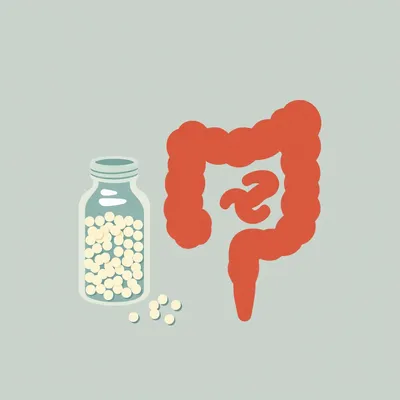
This is where the medical establishment is starting to look closer. Post-cholecystectomy syndrome, or P-C-S, is a bit of a catch-all term. It refers to symptoms like indigestion, diarrhea, bloating, and even right-sided pain that persists or develops after the surgery. Recent reviews suggest that a substantial minority of patients – in some studies approaching four in ten – experience some form of P-C-S, depending on how strictly it is defined.
That is a huge number for a surgery that is often described as having no long-term downsides.
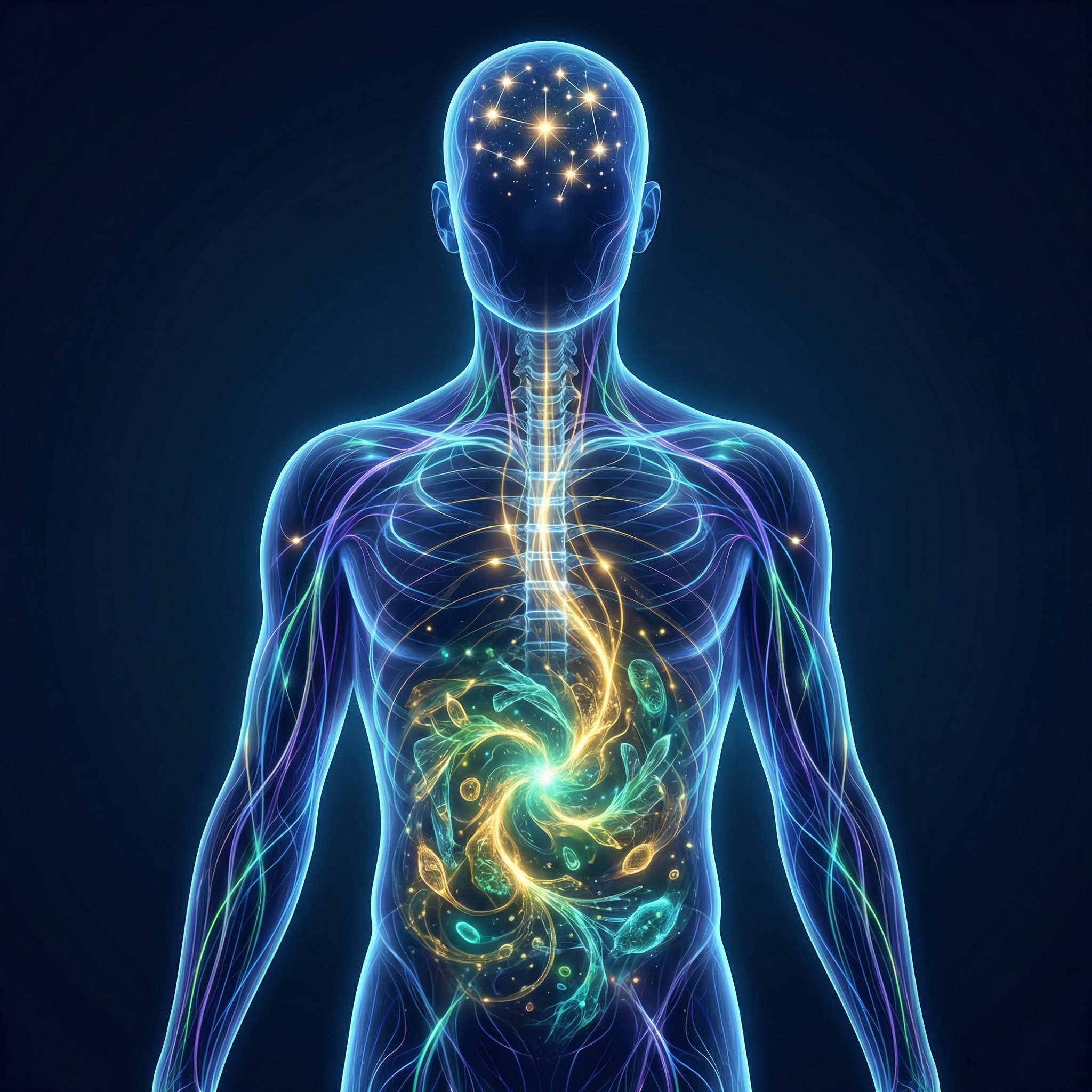
It really is. And the reasons for it are multifaceted. Sometimes it is a structural issue, like a stone left behind in the bile duct or a problem with the Sphincter of Oddi, which is the little valve that controls the flow of bile into the intestine. But in many cases, it is simply because you have changed the flow of bile. Without a gallbladder, bile isn't stored and released in a big burst when you eat. Instead, it drips continuously from the liver into the small intestine.
So it is like a leaky faucet instead of a pressurized hose?
That is a perfect analogy. And that constant drip of bile can irritate the lining of the stomach or the intestines. It can lead to what is called bile acid malabsorption, where the bile salts aren't reabsorbed properly at the end of the small intestine, which causes that urgent, watery diarrhea after eating.
It sounds like a classic case of solving one problem—the gallstone pain—but creating a chronic, systemic issue in its place. Which leads to Daniel's second question: Is the medical establishment moving toward more conservative management or organ preservation?
There has been a noticeable shift in just the last few years. A landmark study called the C-GALL trial reported that for many people with uncomplicated symptomatic gallstones, starting with conservative management—observation and pain control—can lead to quality-of-life outcomes comparable to immediate surgery, and it is more cost-effective, although some patients ultimately still need an operation. In fact, it's significantly more cost-effective and avoids the risk of P-C-S entirely for those who never go on to have surgery.
That is a big deal. So we are moving away from the eighteen eighty-two mindset that the factory is broken and must be shut down?
Slowly, yes. In the West, the standard is still often removal, but "watchful waiting" is now a clinically supported first step. And then there is the research coming out of China regarding gallbladder-preserving surgery.
Is that the one where they just take the stones out?
Exactly. It is called choledochoscopic gallbladder-preserving cholecystolithotomy. While Western surgeons have long been skeptical, claiming the stones will just come back, large Chinese series of gallbladder-preserving surgery have reported relatively low stone-recurrence rates over long-term follow-up—often on the order of about 10–20%—which is lower than many assumed and preserves the organ's function.
That seems like a game-changer. Why isn't that being done everywhere?
There is still a lot of institutional momentum behind removal. But as Daniel's experience shows, the definition of a successful surgery needs to include the long-term quality of life, not just the absence of stones. If you remove the organ and the patient ends up with chronic digestive issues for twenty years, was that really a better outcome?
Right. So for those who have already had the surgery and are dealing with these long-term complications, is there hope? What does the landscape look like in twenty twenty-six for managing life without a gallbladder?
There is a lot of hope, specifically coming from a better understanding of the gut microbiome and bile acid metabolism. Many patients were historically advised to follow a low-fat diet after surgery, but more recent thinking recognizes that very low fat intake can sometimes make things worse. If you eat zero fat, the bile still drips into your intestine but has nothing to do, so it just sits there and irritates the lining.
So you actually need a little bit of fat to give the bile a job?
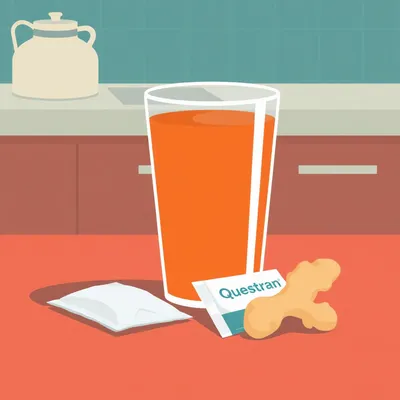
Precisely. Small, frequent amounts of healthy fats like olive oil help emulsify that steady drip. And we have better diagnostic tools now, like the Se-H-C-A-T scan, which can definitively prove if someone has bile acid malabsorption. Once you have that diagnosis, you can use targeted bile acid sequestrants like colesevelam, which bind to the excess bile so it doesn't irritate the colon.
And what about the microbiome research you mentioned earlier?
That is the most exciting part. Research from twenty twenty-five identified specific "bile salt hydrolase" active bacteria. These are the microbes that help your body process and recycle bile. We are starting to see the development of precision probiotics designed specifically for post-cholecystectomy patients to help their microbiome handle that constant bile flow.
So instead of just trying to soak up the bile, we are trying to help the bacteria process it more effectively. It is about finding a new equilibrium.
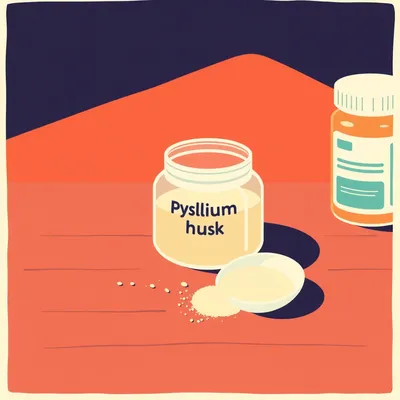
Exactly. It is the classic medical arc. We find a surgical solution, it becomes the gold standard, and then we spend the next few decades realizing the nuance of what we lost. For Daniel and others, the future isn't just "eat less fat." It is a personalized protocol: the right fiber to bind the bile, the right probiotic to protect the colon, and a meal schedule that matches the liver's output.
You know, it reminds me of our discussion back in episode one hundred and five about A-I benchmarks. We often look for one single metric or one single solution—like removing the gallbladder—and we think, okay, problem solved. But biology is full of interconnected dependencies. You pull one thread, and the whole tapestry shifts.
That is such a good point, Corn. A tiny drip in the wrong place over a long period of time can cause massive structural damage. A constant drip of bile into an empty intestine is a biological leak that eventually erodes the quality of life.
Well, Herman, I think we have covered the history, the current shift in thinking, and the hope for the future. I hope this gives Daniel some context for why things have been so difficult. It isn't just in his head; it is a fundamental shift in his body's chemistry.
It really is. And to our listeners, if you are facing this surgery, ask about the C-GALL trial and conservative management. If you have already had it, look into bile binders and microbiome support. You don't have to accept these symptoms as your new normal.
Well said. Before we wrap up, I want to thank Daniel for sending in such a thoughtful and personal prompt. If you have your own story to share, you can find our contact form at myweirdprompts.com.
And if you enjoyed this deep dive, please leave us a review on Spotify or Apple Podcasts. It genuinely helps other curious minds find the show.
It really does. All right, this has been My Weird Prompts. I am Corn.
And I am Herman Poppleberry.
We will see you next time.
Until then, keep asking the weird questions.
Let's go get some lunch, Herman. Small, frequent portions?
Exactly. Maybe some oats for that soluble fiber.
Perfect. See ya.
See ya.