Hey everyone, welcome back to My Weird Prompts! I am Corn, and I am joined as always by my brother.

Herman Poppleberry, at your service. It is great to be back in the studio, or well, back in our living room here in Jerusalem.
Exactly. And we have a really fascinating prompt today from our housemate Daniel. He was actually showing us this little device he bought the other day, and it got him thinking about the entire global economic machine.
It is one of those things where once you start pulling the thread, the whole sweater of global trade starts to unravel. Daniel picked up a Zigbee human presence sensor. It uses low power millimeter wave radar, and it cost him about fifteen dollars. Now, if you had told an engineer twenty years ago that you could get a functioning radar system that fits in your palm and integrates with a wireless mesh network for the price of a fancy sandwich, they would have called you a liar.
It really is mind-boggling. I mean, we are talking about a device that has a sophisticated sensor, a microcontroller, a radio transmitter, a power management circuit, and a plastic housing. It was designed, manufactured, packaged, and then shipped from a factory in China all the way to our doorstep here. And after all that, there is still enough profit left over for the manufacturer and the seller to stay in business.
Right. And it is not just the assembly. It is the research and development, the software firmware, the certification for wireless standards. How do we get to fifteen dollars? Today, we are going to dive into the hidden machinery of the twenty twenty-five tech economy. We are looking at the hyper-efficient manufacturing clusters in places like Shenzhen, the massive economies of scale in semiconductor production, and the weird, sometimes controversial world of international shipping subsidies.
I think a good place to start, Herman, is the actual technology inside. Daniel mentioned it is a radar sensor. Most people think of radar as something on a battleship or a weather station. How did we shrink that down to a fifteen dollar consumer toy?
That is the magic of what we call CMOS integration. CMOS stands for Complementary Metal-Oxide-Semiconductor. It is the same process we use to make computer processors and memory. In the past, radar required specialized, expensive materials like Gallium Arsenide. But in the last decade, engineers figured out how to build millimeter wave radar components directly onto standard silicon wafers.
So, because we are already making billions of chips for phones and laptops, we can just piggyback on that existing infrastructure?
Precisely. Once you can print a radar sensor on silicon, the marginal cost of producing one more chip drops to almost nothing. We are talking cents, not dollars. The high cost is all in the initial design and the multi-billion dollar fabrication plants, or fabs. But when you are selling these chips to hundreds of different companies making thousands of different products, those fixed costs get spread so thin they practically disappear.
That explains the chip, but what about the rest of the device? There is a whole ecosystem around these products that seems unique to certain regions.
You are hitting on the concept of industrial clusters. If you look at a place like the Pearl River Delta in China, specifically Shenzhen, you have what people call the Silicon Valley of Hardware. In most parts of the world, if you need a specific type of screw, a custom-molded plastic case, and a specific wireless antenna, you might have to source them from three different countries. In Shenzhen, you can find all of those things within a three-mile radius.
I have heard people describe it as a living library of parts. If you are a designer there, you do not start from scratch. You look at what is already being mass-produced and you design your product to use those exact parts.
Exactly. It is called Shanzhai culture. It started as a term for knock-offs, but it evolved into this incredibly efficient open-source hardware ecosystem. Designers share board layouts, housing designs, and code. If Daniel's sensor uses a standard plastic shell that ten thousand other companies are also using, the cost of that plastic drops to the price of the raw resin plus a tiny fraction of the mold cost.
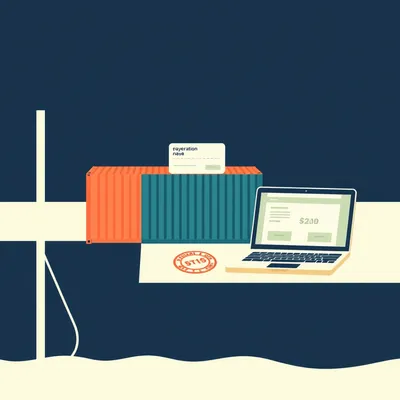
So, it is a massive game of standardization. But even then, fifteen dollars is so low. I was looking at the shipping labels on some of these packages. Sometimes the shipping cost listed is less than two dollars. How is that possible for an international flight or a cargo ship?
That is one of the most controversial parts of this whole equation. It involves something called the Universal Postal Union, or UPU. This is a United Nations agency that coordinates postal policies worldwide. For a long time, China was classified as a developing country under UPU rules. This meant that other countries, like the United States or Israel, had to deliver small packages from China at a deeply discounted rate.
Wait, so the local postal service in the destination country is actually subsidizing the delivery of the Chinese product?
In many cases, yes. The receiving postal service often loses money on those small packages. While those rules have been changing recently to be more balanced, the legacy of those systems created the massive logistics pipelines we see today. Companies like Cainiao, which is the logistics arm of Alibaba, have also optimized shipping to an insane degree. They aggregate millions of tiny packages into giant containers, and they use sophisticated AI to route them through the cheapest possible channels.
It feels like the entire world has been optimized for the movement of small, high-tech boxes. But I wonder about the human cost. We often hear about low wages in these manufacturing hubs. Is that the primary driver?
It is a factor, but it is becoming less of one. In twenty twenty-five, a lot of the assembly for these types of high-volume electronics is highly automated. Robots do not care about the minimum wage. The real advantage now is the speed of the supply chain. If a factory needs a million more capacitors to finish a run, they can get them delivered by a scooter in twenty minutes. That kind of agility prevents expensive downtime, which is a huge cost saver.
That is a great point. Time is money, especially when you are operating on razor-thin margins. But before we go any deeper into the economics of the supply chain, we should probably take a quick break for our sponsors.
Larry: Are you tired of your dreams being boring and predictable? Do you wake up feeling like your subconscious just isn't trying hard enough? Then you need the Dream-Weaver Five Thousand. The Dream-Weaver is a revolutionary head-mounted device that uses low-frequency sonic pulses to gently nudge your REM cycle into high gear. Simply strap the Dream-Weaver to your forehead before bed, dial in your preferred genre—we offer everything from High Fantasy to Corporate Spreadsheet Analysis—and let the technology do the rest. Users have reported dreams so vivid they occasionally forget their real names for up to forty-five minutes after waking. Is it safe? It's tech! Is it legal? Our lawyers are currently in a very deep sleep, so we're assuming yes! The Dream-Weaver Five Thousand—because reality is just a dream you can't turn off. Larry: BUY NOW!
Thanks, Larry. I think I will stick to my regular, boring dreams for now.
Yeah, I am not sure I want to dream about corporate spreadsheets. I do enough of that during the day.
Alright, back to the topic. We were talking about how these fifteen dollar sensors are even possible. We covered the chips and the local clusters in China. But I want to talk about the software side. Daniel mentioned this is a Zigbee device. Why does the choice of wireless protocol matter for the price?
That is a brilliant question, Corn. Zigbee is an open standard. Unlike proprietary systems where you might have to pay a massive royalty fee for every single device you sell, Zigbee is managed by the Connectivity Standards Alliance. While there are still some fees and certification costs, they are relatively low when spread across millions of units.
And because it is an open standard, there are multiple companies making the radio chips, right? Competition drives the price down.
Exactly. You have companies like Silicon Labs, Texas Instruments, and Espressif all competing to make the cheapest, most power-efficient Zigbee-capable chips. And here is where it gets even more interesting. In recent years, we have seen the rise of multi-protocol chips. The same five-cent chip might be able to do Zigbee, Bluetooth Low Energy, and even the new Matter standard. By making one chip that fits every use case, the manufacturers can produce them in even higher volumes, which further drives down the cost.
It is a virtuous cycle of affordability. But I want to go back to something Daniel mentioned in his prompt. He talked about how he felt like his older computer, an i3 processor, felt like dinosaur technology compared to the efficiency of these new little sensors. It is a weird paradox, isn't it? The most advanced tech is often the cheapest.
It is the ultimate manifestation of Moore's Law. But it is also about the specialization of the hardware. That i3 processor is a general-purpose beast. It is designed to do anything you throw at it. These sensors use what we call ASICs, or Application-Specific Integrated Circuits. They are designed to do exactly one thing—process radar data and send a Zigbee packet. Because they do not need to run a web browser or edit video, they can be much simpler and much more efficient.
So, we have reached a point where we can mass-produce specialized intelligence. But what about the environmental impact? If we can buy a sophisticated radar sensor for fifteen dollars, does that make it disposable?
That is the dark side of this economic miracle. When the cost of the device is less than the cost of a technician's time to repair it, the device becomes e-waste the moment it breaks. We are seeing a massive accumulation of these small, cheap IoT devices. They are full of plastics, rare earth metals, and lithium batteries. The global recycling infrastructure is nowhere near ready to handle the volume of fifteen dollar sensors we are pumping out.
It is almost like the economy is optimized for the "buy" button but not the "recycle" button. Do you think we will see a shift in how these things are priced to account for that?
There is a lot of talk about extended producer responsibility. In some parts of Europe, manufacturers are starting to be held accountable for the end-of-life costs of their products. If you had to add a five dollar "recycling tax" to every fifteen dollar sensor, it would change the math significantly. But for now, the global market is still focused on that low-entry price point.
I also wonder about the data. Some people argue that these devices are so cheap because the hardware is not the actual product—the data is. Is Daniel's presence sensor spying on him to make up the rest of the profit?
In the world of cheap smart home gear, that is always a concern. If a device requires a connection to a proprietary cloud server to work, you have to ask yourself: how is the company paying for those servers if I only paid fifteen dollars once? Often, the answer is data harvesting. They want to know when you are home, what your routines are, and what other devices are on your network.
But Daniel's device is Zigbee. That is a local protocol. It does not need the internet to function, right?
That is why Zigbee is so popular with the privacy-conscious crowd. If you use a local coordinator like Home Assistant, the data never leaves your house. In that case, the manufacturer really is just making their money on the hardware. It just goes to show how incredibly efficient they have become at making that hardware.
It is a testament to human ingenuity and, frankly, a bit of a miracle of coordination. Think about all the people who had to cooperate to get that sensor to Daniel. The miners in Africa getting the raw materials, the engineers in California designing the architecture, the factory workers and robot technicians in Shenzhen, the sailors on the container ships, and the delivery driver here in Jerusalem. All of that for fifteen dollars.
It is the "I, Pencil" essay for the twenty-first century. No single person knows how to make that sensor from scratch. It requires the collective knowledge of our entire species. And because we have standardized everything from the size of shipping containers to the frequency of wireless signals, we can do it with almost zero friction.
So, what is the takeaway for our listeners? When you see something that seems impossibly cheap, it is usually not just one thing. It is a combination of massive scale, hyper-efficient logistics, specialized hardware, and sometimes, hidden subsidies or data trades.
And I think we should appreciate the complexity of it. Even though it is cheap, it is not "cheap" in terms of the effort required to create it. We are living in an era where the most sophisticated tools in human history are also the most accessible. That has huge implications for how we build our homes, how we manage our energy, and how we interact with the world.
I agree. It is empowering, but it also comes with a responsibility to think about the lifecycle of these products. We should choose devices that are open, like Daniel's Zigbee sensor, so we have more control over them and they do not just become e-waste when a company decides to shut down its servers.
Well said, Corn. I think we have really unpacked the "why" behind Daniel's fifteen dollar radar. It is a mix of silicon physics, global postal treaties, and the sheer density of talent in a few square miles of Chinese coastline.
It has been a great discussion. I feel like I understand that little plastic box on our wall a lot better now.
Me too. It is not just a sensor; it is a physical manifestation of the global economy.
Before we wrap up, I want to thank Daniel for sending in this prompt. It was a great one to dig into. If you have a weird prompt for us, head over to myweirdprompts.com and use the contact form. We love hearing what is on your mind.
And don't forget to follow us on Spotify or wherever you get your podcasts. We have a lot more deep dives coming your way.
Thanks for joining us. This has been My Weird Prompts. I am Corn.
And I am Herman Poppleberry. We will see you next time.
Take care, everyone. And maybe think twice before you buy that five dollar smart-toaster.
Unless it's Zigbee compatible, of course.
Of course. Goodbye!
Bye!