Welcome back to My Weird Prompts, everyone. It is a beautiful Sunday morning here in Jerusalem, January fourth, twenty twenty-six. I am Corn, and I am sitting here in our living room with my brother, the man who probably has more microcontrollers in his bedside drawer than most people have socks.

Herman Poppleberry, present and accounted for. And you are not wrong, Corn. I actually found a stray ESP-thirty-two under the sofa cushions yesterday while I was looking for the remote. It is a bit of a problem.
Well, it is a timely problem because our housemate Daniel sent us a prompt that is right up your alley. He has been looking for a very specific type of smart home device for years, basically a status indicator light that works with Zigbee, and he has come up empty-handed. He wants to know if he should just stop searching and start building his own using an ESP-thirty-two to integrate with our Home Assistant setup.
Oh, I love this. This is the classic crossroads of the smart home enthusiast. You spend weeks scouring AliExpress and Amazon for a product that fits your exact aesthetic and protocol needs, only to realize that for about five dollars and a bit of frustration, you could just make the thing yourself.
Exactly. And Daniel has some pretty serious use cases in mind. He mentioned the rocket alert system we have here in Israel, the Red Alert system. We have talked about this in past episodes, specifically back in episode two hundred fifty-six when we were looking at smart city infrastructure. But he wants a physical light that changes color based on the alert status, green for all clear, red for get to the shelter, and orange for a tentative alert. Plus, he wants to use it for our home alarm status so he does not accidentally trigger the siren when he is taking the trash out at one in the morning.
That is such a practical application. There is something about a physical, ambient light that is so much more effective than a phone notification. If you are half-asleep or your phone is in the other room, a glowing red orb in the hallway tells you exactly what you need to know instantly.
So, let's break this down for him. He specifically asked about the ESP-thirty-two versus the Arduino. Now, for the uninitiated, these are the brains of DIY electronics. Why has the ESP-thirty-two become the go-to for Home Assistant users?
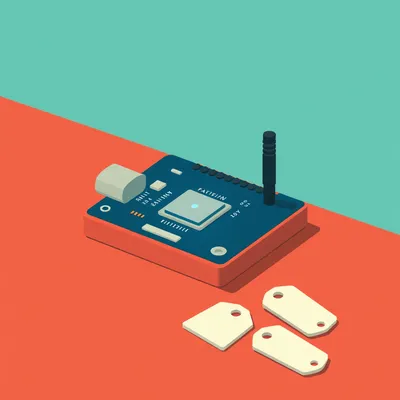
It really comes down to connectivity and horsepower. Arduino, specifically the classic Uno or Nano, is fantastic for learning the basics of electronics. It is rugged and simple. But most of the older Arduinos do not have built-in WiFi or Bluetooth. If you want to connect an Arduino to your home network, you usually have to buy a separate shield or module, which makes the project bulky and more expensive. The ESP-thirty-two, which is made by a company called Espressif Systems, has WiFi and Bluetooth baked right onto the chip.
And that is crucial for Home Assistant, right? Because you need that constant communication.
Exactly. In twenty twenty-six, we take it for granted, but the jump from the older ESP-eighty-two-sixty-six to the ESP-thirty-two was huge. The thirty-two is dual-core, it is much faster, and it has enough memory to handle more complex tasks. But the real "killer app" for the ESP-thirty-two in the smart home world is a piece of software called ESPHome.
I have heard you raving about ESPHome before. That is the one where you do not actually have to write much code, right?
Precisely. Instead of writing complex C-plus-plus code in the Arduino Integrated Development Environment, you write a simple configuration file in a format called YAML, which stands for Yet Another Markup Language. You basically tell the software, "I have an LED on pin five and a button on pin four," and ESPHome handles all the networking, the connection to Home Assistant, and the over-the-air updates. It turns a weekend-long coding struggle into a five-minute configuration task.
That sounds perfect for Daniel, especially since he is more of a "get it working" type than a "spend ten hours debugging a semi-colon" type. But what about the Zigbee side of things? He mentioned he could not find a Zigbee version of this light. Can you make a DIY Zigbee device?
You can, but it is significantly harder than WiFi. There are chips like the ESP-thirty-two-C-six that support Zigbee, but the software ecosystem is not nearly as plug-and-play as the WiFi-based ESPHome. For someone starting out, I always recommend sticking to WiFi for DIY sensors and indicators. Since we have a robust mesh network at home, as we discussed in episode two hundred fifty-eight about gigabit bottlenecks, the WiFi overhead for a simple status light is negligible.
Okay, so ESP-thirty-two is the winner for the brain. But what about the "body" of this project? Daniel wants something that looks cool, not just a bunch of wires sticking out of a cardboard box. What parts are we actually looking at here?
If he wants a status light that can do multiple colors, he needs what we call addressable LEDs, specifically the WS-twenty-eight-twelve-B, often called NeoPixels. These are great because you only need one data wire to control hundreds of LEDs, and each one can be any color of the rainbow. For a status indicator, he could use a small ring of eight or sixteen LEDs, or even just a single high-brightness one.
And for the enclosure? That seems to be where most DIY projects fall apart aesthetically.
This is where the world of twenty twenty-six is so much better than ten years ago. He could three-D print a custom case, or he could go the "hacker" route and find a nice-looking frosted glass jar or a vintage lamp and gut the internals. There are also plenty of off-the-shelf plastic enclosures designed specifically for the ESP-thirty-two.
You know, it strikes me that the rocket alert use case is actually quite technically interesting from a data perspective. He mentioned the Home Front Command integration in Home Assistant. How does the ESP-thirty-two actually "know" when to turn red?
That is the beauty of the Home Assistant ecosystem. The integration monitors the official alerts. In Home Assistant, you would set up an automation. It says, "When the state of the Red Alert entity changes to 'Alerting', send a command to the ESP-thirty-two to turn the LEDs red." When the status changes to "All Clear," it sends a command to turn them green. The ESP-thirty-two itself does not have to know anything about the military or rockets; it just waits for instructions from the central hub.
It is like a digital servant that only knows how to change its shirt color.
Exactly. And because it is an ESP-thirty-two, you can do more than just colors. You could make it pulse, or flash, or even play a small sound if you attach a buzzer. Although, given how loud the sirens are in Jerusalem, I think a silent visual indicator is probably better for the house's stress levels.
Definitely. I think we have all had enough of loud noises. But before we get into the AI tools that can help Daniel build this, we should probably hear from someone who has a very different kind of "indicator" to sell us.
Oh boy. Here we go.
Let's take a quick break for our sponsors.
Larry: Are you tired of your house being too quiet? Do you ever sit in your living room and think, "I wish I knew exactly when the silence was becoming unbearable?" Introducing the Silence Siren! This revolutionary device uses patented vacuum-sensing technology to monitor the decibel levels in your home. The moment the room reaches a state of perfect peace, the Silence Siren emits a bone-chilling, one hundred and forty decibel shriek to remind you that the world is still full of chaos! It is perfect for libraries, nurseries, and meditation retreats. Do not let the quiet win. Get the Silence Siren today! Larry: BUY NOW!
...I really need to talk to Daniel about who he lets into the house to record these ads. A silence siren? That sounds like a literal nightmare.
It is Larry, Herman. You cannot reason with him. Anyway, back to the world of things that actually make sense. Daniel asked about AI-assisted tools for development. This is a huge shift in the last couple of years. If Daniel wants to build this status light today, in early twenty twenty-six, how does AI change the onboarding process?
It is a complete game-changer. Two years ago, if you hit a wall with your code, you were digging through old forum posts from twenty fourteen. Now, tools like Claude and ChatGPT are incredibly proficient at writing ESPHome configurations and Arduino code. If Daniel tells an AI, "I have an ESP-thirty-two-S-three and a strip of ten NeoPixels on pin eighteen, write me a YAML file for ESPHome that integrates with Home Assistant," it will give him a nearly perfect file in seconds.
But it is more than just code, right? What about the hardware side? Can AI help with the "where do I plug this wire" part?
Yes! There are new tools specifically for hardware design. For example, there are AI-powered circuit simulators where you can describe your components, and it will show you a diagram of how to wire them together. Some even offer "vision" features where you can take a photo of your breadboard, and the AI will tell you, "Hey, you have that resistor in the wrong hole, you are going to short out your board."
That would have saved me so many burnt-out components in college.
You and me both. There is also a huge movement toward AI-assisted PCB design. If Daniel decides he wants to move past the "mess of wires" phase and actually design a professional-looking circuit board, tools like Flux use AI to help route the traces and ensure the electrical signals are clean. It lowers the barrier to entry from "electrical engineer" to "hobbyist with a good idea."
So, if Daniel is starting from scratch, what is the actual shopping list? He mentioned parts and where to begin.
Step one: get an ESP-thirty-two development board. I recommend the ESP-thirty-two-S-three. It is the modern standard, it has plenty of pins, and it is very well-supported. You can find them on Amazon or sites like Adafruit and SparkFun for about ten to fifteen dollars.
And he mentioned breadboards. For those who do not know, what are those?
A breadboard is a plastic board with a bunch of holes in it that allows you to prototype circuits without soldering. You just plug the wires and components in. It is essential for learning. Daniel mentioned he was worried about breadboards because he is an asthmatic, but I think he might be confusing breadboards with something else? Or maybe he is worried about the dust? Usually, breadboards are very clean. It is the soldering that produces fumes.
Ah, that makes sense. If he wants to avoid fumes, sticking to a breadboard or using "Dupont" jumper wires is the way to go. No heat, no lead, no smoke.
Exactly. So, shopping list: ESP-thirty-two development board, a pack of jumper wires, a breadboard, and a strip of WS-twenty-eight-twelve-B LEDs. He will also need a USB-C cable to plug the board into his computer. That is really it for the hardware. Total cost is probably under thirty dollars.
That is remarkably cheap for a custom solution. But let's talk about the "why" again. Daniel mentioned he wants to use this for the home alarm. We have been using Zigbee door sensors for a while now, as we talked about in episode two hundred sixty-one when we discussed building a digital workforce with agents. Why is the status light better than just checking the Home Assistant app on his phone?
It is about "cognitive load," Corn. We are already bombarded with notifications. If you are rushing out the door, you do not want to pull out your phone, unlock it, open an app, and wait for it to load just to see if the alarm is set. If there is a small glowing green light next to the front door, you know you are good. If it is red, you know you need to disarm it. It is "ambient computing." The information is just there in the environment, waiting for you to glance at it.
I love that term, ambient computing. It makes the house feel like it is actually smart, rather than just a collection of remote-controlled gadgets.
Precisely. And for the rocket alerts, it is even more vital. During the escalations we had last year with the Houthi drones and the Iranian strikes, the lag in some apps was a real issue. A local Home Assistant setup with a hardwired or WiFi-connected light is incredibly fast. We are talking milliseconds of latency. In a situation where you only have ninety seconds to get to a shelter, every second counts.
You know, it occurs to me that once Daniel builds this, he is going to want to put them everywhere. One in the kitchen, one in the bedroom, maybe one in the bathroom. Does that complicate the Home Assistant side of things?
Not at all. That is the beauty of ESPHome. Once you have the first one working, you just copy the configuration, give the second one a new name, like "Bedroom Status Light," and flash it. Home Assistant will automatically discover it. You can even group them together so they all change color at the same time.
What are some of the "gotchas" or misconceptions that most people run into when they start with the ESP-thirty-two?
The biggest one is power. A lot of people try to power a long strip of LEDs directly from the ESP-thirty-two board. The board can only handle a small amount of current. If you try to power fifty LEDs at full brightness, you will probably smell something burning, and it won't be Larry's dinner. You need a separate five-volt power supply for the LEDs if you are doing a large project. For Daniel's small status light, he can probably get away with it, but it is something to watch out for.
Another thing I have noticed is that people sometimes struggle with the WiFi signal. These chips are small, and their antennas are not exactly high-gain.
That is a great point. If you put the ESP-thirty-two inside a metal box or behind a thick stone wall, the connection will drop constantly. Always use a plastic or wooden enclosure if possible. Or, if you really need a metal case, you can buy a version of the ESP-thirty-two that has a connector for an external antenna.
Okay, so we have the hardware, the software, the AI tools, and the power considerations. What is the very first step Daniel should take when he sits down at his desk this afternoon?
First step: install the ESPHome dashboard as an add-on in Home Assistant. It is a one-click install. Then, plug the ESP-thirty-two into his computer via USB. The dashboard will actually walk him through the initial "flashing" process right through his web browser. It is incredibly slick. He does not even need to install any drivers on his computer in most cases.
That is a far cry from the days of manually installing COM port drivers and praying the upload does not fail at ninety-nine percent.
Oh, tell me about it. I still have scars from the early Arduino days. But honestly, the most important thing is to start small. Just get an LED to blink. Once you see that light blinking, you feel like a wizard. From there, adding the Home Assistant logic is easy.
I think this is a perfect project for him. It solves a real problem, it uses existing infrastructure, and it is a great gateway into the deeper world of custom hardware. Plus, it will stop him from waking us up at one in the morning with the alarm siren.
That is the real goal. Peace and quiet. Well, unless Larry's Silence Siren goes off.
We do not speak of that. So, to recap for Daniel and anyone else listening who wants to dive into this: go with the ESP-thirty-two over the Arduino for the built-in WiFi and ESPHome support. Use AI tools like Claude to help write your YAML configuration. Stick to a breadboard and jumper wires to avoid the "asthma-triggering" soldering fumes. And most importantly, have fun with the design. This is your chance to make something that actually fits your home's aesthetic.
And if you do make something cool, send us a photo! We would love to see what our listeners are building. You can find the contact form on our website at myweirdprompts dot com.
Absolutely. And while you are there, if you haven't subscribed to the RSS feed yet, that is the best way to make sure you never miss an episode. We are also on Spotify, obviously, which is where most of you are probably listening right now.
And hey, if you have been enjoying the show and our brotherly banter, we would really appreciate it if you could leave us a quick review on your podcast app or a rating on Spotify. It genuinely helps the show reach more people who are interested in this kind of deep-dive exploration.
It really does. We have been doing this for two hundred sixty-three episodes now, and the community of "weird prompt" seekers is what keeps us going.
Two hundred sixty-three... that is a lot of hours of talking, Corn.
And a lot of hours of you explaining microcontrollers to me.
And I wouldn't have it any other way.
Me neither. Well, I think that covers Daniel's request for today. Good luck with the status light, Daniel. We are expecting a fully functional Red Alert indicator in the hallway by next week.
No pressure! Just remember to double-check your ground wires.
Thanks for listening to My Weird Prompts. We will be back next week with another deep dive into whatever is bouncing around Daniel's head.
This has been Herman Poppleberry and Corn. See you next time!
Bye everyone!
Larry: BUY NOW!