Hey everyone, welcome back to another episode of My Weird Prompts. We are coming to you from a somewhat chilly Jerusalem morning today. I am Corn, and sitting across the kitchen table from me is my brother.

Herman Poppleberry, present and accounted for. I have my coffee, my research tabs open, and I am ready to dive into the deep end.
Well, you are in luck, because our housemate Daniel sent us a prompt that is right up your alley. He was listening to some of our older episodes, specifically the one where we talked about the O-S-I model, and he realized we keep mentioning something called B-G-P, or the Border Gateway Protocol, without really giving it its own spotlight.
Oh, B-G-P. It is the big one. It is essentially the glue that holds the entire global internet together. If B-G-P stopped working today, the internet would just become a collection of isolated islands that could not talk to each other.
Right, and Daniel had some specific questions about it. He wants to know how it actually functions, how many of these protocols or systems are running at once, and how different companies and internet service providers work together using it. He also brought up an interesting point about the specific way internet was set up here in Israel for a long time, with the split between the infrastructure provider and the internet service provider.
That is a great angle. The infrastructure versus service provider split is actually a perfect way to visualize the different layers of responsibility. But before we get to the local quirks, we should probably establish what B-G-P is doing at the global level.
Yeah, let's start with the big picture. When we talk about routing, most people think of their home router. It sends data from your laptop to your phone or your television. But B-G-P is not that. It is not interested in your individual devices. It is interested in entire networks.
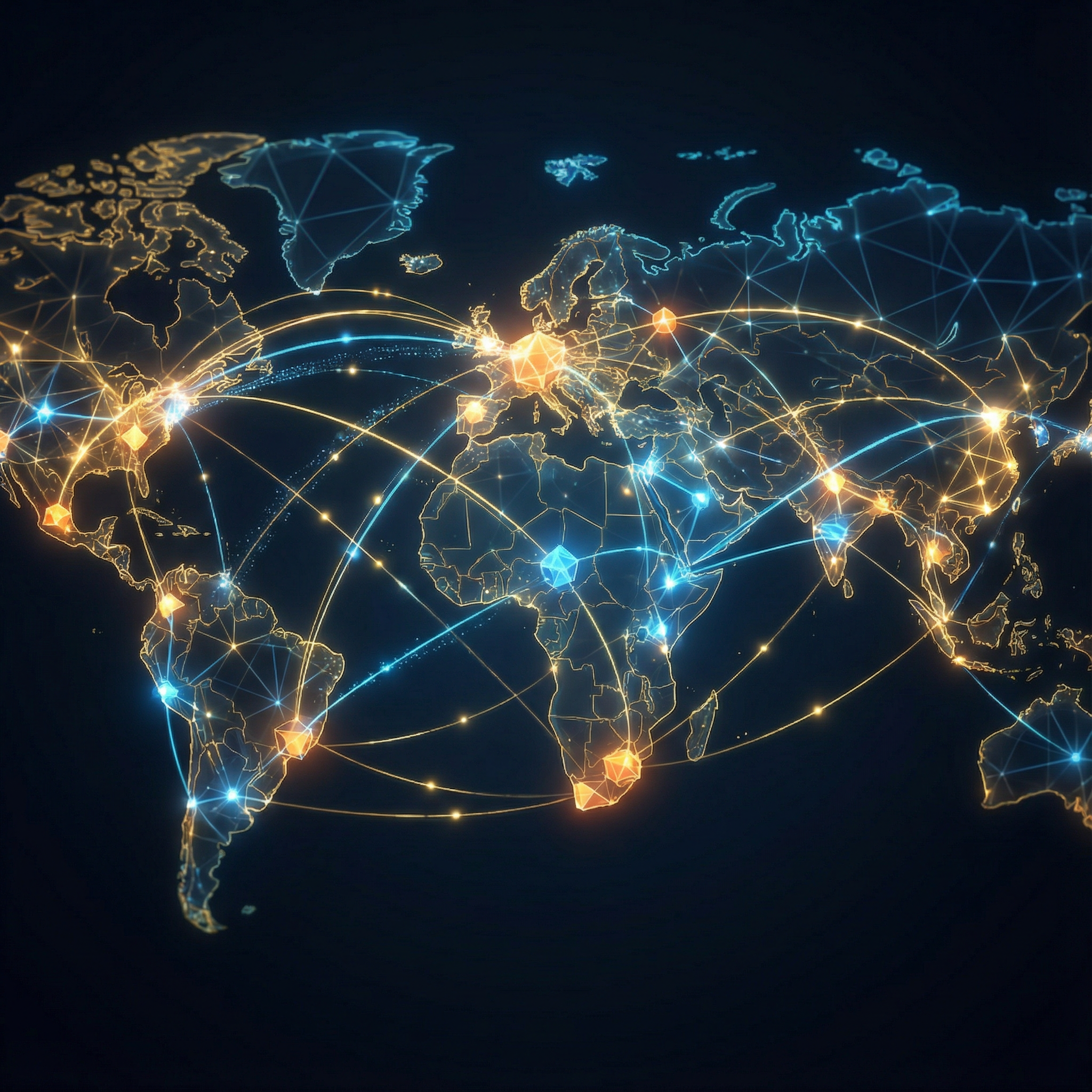
Exactly. Think of the internet not as one single network, but as a network of networks. These individual networks are called Autonomous Systems, or A-S for short. Each one is a collection of I-P address ranges under the control of a single entity, like an internet service provider, a university, or a massive tech company like Google or Amazon.
So, if I am sending an email from my house here in Jerusalem to a friend in New York, my data has to jump across multiple Autonomous Systems to get there.
Precisely. And B-G-P is the protocol that those Autonomous Systems use to talk to each other. It is how they tell the rest of the world, hey, if you want to reach these specific I-P addresses, you can go through me. It is essentially the postal service for the post offices. While your home router handles the local mail delivery within your house, B-G-P handles the massive trucks and planes moving mail between cities and countries.
That is a good analogy. But how does it actually decide which path to take? Because there must be thousands of different ways to get that data across the ocean.
This is where it gets really interesting and a bit political. Most internal routing protocols, the ones used inside a single company, are designed to find the fastest path. They look at things like latency or bandwidth. But B-G-P is what we call a path vector protocol. It does not just look at speed; it looks at the path of Autonomous Systems it has to cross. And more importantly, it looks at policy.
Policy? You mean like, business agreements?
Exactly. The internet is not just a technical achievement; it is a massive economic web. When one network connects to another, they usually have a contract. This is what we call peering or transit. In a peering agreement, two networks agree to exchange traffic for free because it benefits both of them. In a transit agreement, one network pays another to carry its traffic to the rest of the internet.
So, when a B-G-P router is looking at ten different ways to send my data to New York, it might choose a path that is slightly slower but cheaper for the internet service provider?
You nailed it. B-G-P allows network administrators to set very specific rules. They can say, prefer this path because we have a free peering agreement with them, or avoid this path because they charge us too much per gigabyte. It is a system built on trust and economic incentives.
That sounds a bit fragile, honestly. If it is built on trust, what happens if someone lies?
Well, that is actually one of the biggest vulnerabilities of the internet. It is called B-G-P hijacking. If a network accidentally or maliciously announces that it owns a set of I-P addresses that it does not actually own, B-G-P routers around the world might start sending traffic to that network instead of the real destination. We saw a widely reported example of this in early twenty twenty-four, when attackers used compromised R-I-P-E N-C-C access credentials belonging to a major provider to submit bogus routing information and hijack traffic affecting Orange Spain and other networks, causing significant disruption just by messing with those announcements.
I remember that. It basically breaks the internet for those services until it is fixed.
It really does. And because B-G-P was designed in the late nineteen eighties, it did not have a lot of security built in. Today, we are finally seeing the fruit of a huge push for something called R-P-K-I, which stands for Resource Public Key Infrastructure. It is a way to cryptographically sign those B-G-P announcements. As of now in early twenty twenty-six, deployment of R-P-K-I is growing but still incomplete: a substantial minority of global routes are covered by valid cryptographic signatures, and an increasing share of internet traffic is checked using R-P-K-I validation. It makes those old-school hijacks much harder to pull off wherever it is deployed.
That is a huge relief. But let's go back to Daniel's question about the logical blocks. He asked if each company or ISP has its own logical block on the network. Is that what you meant by the Autonomous System?
Yes, and it is a two-part answer. The A-S is the logical identity—the company's ID card. But they also own blocks of I-P addresses called prefixes. So, an I-S-P historically known as Bezeq International has its own unique number, A-S nine one one six, and it tells the world, I am the gateway for these specific blocks of I-P addresses. When Daniel asks how many are running, he might be surprised. There is only one B-G-P protocol, but there are millions of individual B-G-P sessions happening simultaneously between routers all over the globe.
And how many of these Autonomous Systems are there? Are we talking hundreds? Thousands?
Far more. As of early twenty twenty-six, there are on the order of tens of thousands of active Autonomous Systems globally—well over seventy thousand—and the B-G-P routing table—the master list of all the individual I-P prefixes being announced—has grown to roughly a million entries for I-P-V-four alone.
Roughly a million? That is a lot of data for a router to keep track of.
It is massive. This is why core internet routers need huge amounts of specialized memory called T-CAM. They have to process these updates constantly. B-G-P is a very chatty protocol. If a fiber optic cable gets cut at the bottom of the Atlantic, thousands of B-G-P routers will immediately start telling their neighbors, hey, that path is gone, use this one instead. This is called convergence.
So, when Daniel was asking about how these providers work together, it is basically through this constant conversation of B-G-P updates. They are all sharing their little piece of the map with everyone else.
Exactly. It is a decentralized map that no one person truly owns. Now, Daniel mentioned the Israeli model of internet service, which I think is a fascinating case study for how these layers work.
Yeah, for those who do not live here, for a long time, you had to buy two separate things to get internet. You had to pay an infrastructure provider, like Bezeq or Hot, and then you had to pay an internet service provider, or I-S-P, like Partner or Cellcom.
Right. In Hebrew, it was called Tashtit for the infrastructure and Sapak for the service provider. From a B-G-P perspective, the infrastructure provider was basically just acting as a long extension cord. They were moving bits and frames at Layer Two. The Layer Three routing—the part where B-G-P lives—happened at the I-S-P level. That is where the actual internet began. Over the past few years, the Ministry of Communications has moved to allow and encourage unified offerings where one company can sell both infrastructure and internet service, reducing the old strict split, but the technical distinction remains. One company digs the hole and lays the fiber, but the other company runs the B-G-P routers that actually talk to the rest of the world.
I think that is a distinction a lot of people miss. They think the company that digs the hole in the street is the one that is the internet. But the internet is really that logical layer of B-G-P agreements. You could have the fastest fiber in the world, but if your I-S-P has bad B-G-P peering agreements, your connection to certain parts of the world will still be slow.
That is such a crucial point, Corn. This is why big I-S-Ps spend so much time and money on peering. They want to connect directly to Netflix, directly to Google, and directly to other major I-S-Ps at places called Internet Exchange Points, or I-X-Ps.
We have one of those here in Israel, right? The I-I-X?
Yes, the Israel Internet Exchange. It is an exchange operated in Israel where many major Israeli I-S-Ps plug their routers into a shared switching fabric. This allows them to trade traffic locally using B-G-P. Without an exchange point, if I sent you a file and we were on different I-S-Ps, that data might have to travel all the way to a router in Frankfurt or London and then back to Jerusalem just to cross the street.
That seems incredibly inefficient.
It used to happen all the time! B-G-P will follow whatever path it is told to follow. This is why I-X-Ps are so important. They keep local traffic local, which lowers latency and saves everyone money.
So, when Daniel asks how B-G-P enables providers to work together to provide the best service, the answer is really about these direct connections and the efficiency of the paths they choose.
Absolutely. And it is also about redundancy. A good I-S-P will have B-G-P sessions with multiple different transit providers. If one provider has an outage—like past incidents where major providers such as Cloudflare have experienced disruptions due to internal configuration errors—B-G-P will usually detect that the path is gone and switch traffic to a backup provider within seconds, assuming that redundancy is in place.
It is amazing that it works at all, given how decentralized and competitive it is. You have all these companies that are essentially rivals, yet they have to cooperate perfectly for any of them to be successful.
It is the ultimate example of enlightened self-interest. If I refuse to carry your traffic, your customers will be unhappy, but my customers will also be unable to reach yours. Everyone loses. So, B-G-P provides the framework for this uneasy but necessary peace.
I want to go back to the scale for a second. You said there are tens of thousands of Autonomous Systems. How does a company get one? Do I just call up an agency and say, I want to be an Autonomous System?
Sort of! You have to apply to a Regional Internet Registry, or R-I-R. Since we are in the Middle East, our registry is RIPE N-C-C. You have to prove that you have a multi-homed network, meaning you are connecting to at least two different other networks, and that you have a legitimate need to manage your own routing. Once they approve you, they give you an A-S-N and usually help arrange a block of I-P addresses.
And once you have that A-S-N, you are officially a peer on the global stage.
You are. But that comes with a lot of responsibility. If you misconfigure your B-G-P router, you can cause problems for people thousands of miles away. This is why network engineering is such a high-stakes profession. One wrong line in a configuration file can take down a whole country's access to a specific service.
It reminds me of that massive Facebook outage a few years ago. That was B-G-P related, right?
It was a classic example. In October twenty twenty-one, Facebook—now Meta—made configuration changes that effectively withdrew its B-G-P routes and disconnected its data centers from its main backbone. Because the data centers were disconnected, they stopped sending B-G-P announcements to the rest of the internet. To the rest of the world, it looked like Facebook had simply ceased to exist. Even their own employees couldn't get into the buildings because their badge readers relied on the network that was down!
That is the ultimate recursive nightmare. You can't fix the network because you can't get into the building because the network is down.
Exactly. It shows just how fundamental B-G-P is. It is the address book of the internet. If you take your name out of the book, no one can find you, no matter how big your house is.
So, for the average person listening to this, what is the practical takeaway? Besides just knowing that B-G-P is this giant, complex system, does it affect their daily life in a way they can control?
Directly? Not really. You can't go into your home router and change B-G-P settings. But indirectly, it affects your choice of I-S-P. When people talk about an I-S-P having a good backbone, what they are often talking about is the quality of their B-G-P peering. If you are a gamer or you do a lot of high-stakes video conferencing, you want an I-S-P that peers aggressively at local exchange points and has multiple high-quality transit paths.
I guess you could use tools like Looking Glass or B-G-P View to actually see how your I-S-P is connected, if you were really nerdy about it.
Oh, absolutely. I do that all the time! You can go to websites that show you the B-G-P map for any A-S-N. You can see who your I-S-P's neighbors are, how many paths they have, and even see if they are currently experiencing any route flapping or instability. It is a completely transparent system, which is one of its best features. Anyone can look at the global routing table.
That transparency is probably what keeps it somewhat honest, too. If an I-S-P starts doing something shady with their routing, the whole world can see it almost instantly.
Precisely. There are monitoring services that alert network admins the moment a weird B-G-P announcement appears. It is a community-policed system in many ways.
We have talked a lot about the technical side, but I am curious about the future. You mentioned R-P-K-I as a security improvement. What else is changing? As we move further into twenty twenty-six, is B-G-P still the final answer, or is there something else on the horizon?
There are always people proposing new architectures, like S-C-I-O-N, which stands for Scalability, Control, and Isolation on Next-Generation Networks. It is an attempt to build a more secure and path-aware internet from the ground up. But the reality is that B-G-P has so much inertia. It is like trying to replace the foundation of a skyscraper while everyone is still living in it.
Right, you can't just turn the internet off for a weekend to upgrade the protocol.
Exactly. So what we are seeing is an evolution of B-G-P rather than a replacement. We are seeing better automation, more robust security through R-P-K-I, and better tools for visualizing these massive datasets. The B-G-P of today is much more sophisticated than the one from nineteen eighty-nine, even if the core logic is the same.
It is amazing how much of our modern world relies on a protocol that was basically sketched out on a napkin during a lunch break.
According to networking lore, the original B-G-P, version one, is often described as having been designed on a couple of napkins by Kirk Lougheed and Yakov Rekhter at an I-E-T-F meeting. They needed a way to connect different parts of the growing internet, and they needed it quickly. They thought it would be a temporary fix. That was over thirty-five years ago.
There is nothing more permanent than a temporary fix that works.
That should be the motto of the entire internet, honestly.
So, to summarize for Daniel, B-G-P is the protocol that allows different autonomous networks to talk to each other. There are well over seventy thousand of these networks, each with its own unique number. They work together not just by finding the fastest path, but by following business and policy agreements that determine how data flows across the globe.
And it is a system that is constantly evolving to be more secure and more efficient, even as the amount of data it has to handle grows dramatically. It is the reason you can click a link in Jerusalem and see a website hosted in Tokyo in a fraction of a second.
It really makes you appreciate the complexity behind something as simple as loading a webpage. I think we have covered a lot of ground here, Herman. From the napkins of the eighties to the R-P-K-I deployments of twenty twenty-six.
It is a wild ride. And I hope this gives Daniel a better sense of why we keep bringing it up. It is the foundation. Everything else we talk about, from the O-S-I model to home networking, eventually has to plug into this global B-G-P machine.
Well, before we wrap up, I want to say thanks to everyone for listening. We have been doing this for two hundred and eighty-eight episodes now, and it is still just as fun as the first one. If you are enjoying the show, we would really appreciate it if you could leave us a review on Spotify or whatever podcast app you are using. It actually helps a lot in getting the show in front of new people.
It really does. And don't forget, you can find our full archive and a way to get in touch with us at our website, myweirdprompts.com. We love getting these questions, so if you have something you are curious about, send it over.
Big thanks to Daniel for the prompt today. It was great to finally give B-G-P the deep dive it deserves.
Absolutely. Until next time, keep asking those weird questions.
This has been My Weird Prompts. We will catch you in the next one.
See ya!
So, Herman, be honest. How many times a week do you actually check the B-G-P looking glass for our I-S-P?
Oh, probably three or four times. Usually when I notice a weird lag spike during a game or if a specific site feels sluggish. It is like checking the weather, but for the internet.
You really are a Poppleberry.
I'll take that as a compliment.
It was intended as one. Mostly. Alright, let's go see if Daniel wants some of this coffee.
I think he's already on his third cup, but I'll check.
Thanks for listening, everyone. Goodbye from Jerusalem.
Bye!
One more thing, Herman. You mentioned the B-G-P table is around a million entries now. Does that mean we need bigger routers at home soon?
No, no. Your home router only needs to know one thing: send everything to the I-S-P. It is what we call a default route. Your router is basically saying, I don't know where the rest of the world is, but I know this guy does. It is only the big providers that need to know the whole map.
That is a relief. I don't think I have space for a carrier-grade router in the living room.
Not with your current cable management, you don't.
Hey! My cables are... getting better.
We'll see. Anyway, we should probably stop talking before this episode becomes three hours long.
Fair point. Goodbye for real this time!
Cheers!