You ever have that moment where you are just sitting on the couch, maybe reading a book or watching a show, and you suddenly catch a whiff of something? Not quite a full-on smoke smell, but just that sharp, acrid hint of something burning? It is incredible how fast your heart rate spikes when you live in an apartment building. You start wondering if it is your toaster, or if the neighbor downstairs left a candle burning, or if something much more serious is happening in the walls. Especially here in Jerusalem during the winter, when everyone has those old space heaters running and the electrical grids in neighborhoods like Nachlaot are practically held together by hope and ancient copper.

It is that instant transition from total relaxation to high-alert survival mode. Herman Poppleberry here, and honestly, that gut reaction is exactly what keeps us safe. It is the amygdala taking the wheel before your conscious brain even realizes there is a problem. But the real question is, once that alarm in your head goes off, are you actually prepared for what comes next? Our housemate Daniel sent us a really thoughtful prompt about this today. He has been beefing up our own home setup with some smart sensors and fire gear, and it got him thinking about the bigger picture of fire safety for apartment dwellers like us.
It is a great topic because the dynamics of a fire in a multi-story building are so different from a single-family home. You are essentially living in a vertical community where your safety is partially dependent on everyone else, and their safety is dependent on you. Daniel was asking about the essentials. Should every home have a fire extinguisher? How do we know if our smoke detectors are actually going to work when it counts? And what do you do when you are on the sixth floor and the one thing you usually rely on, the elevator, is suddenly off-limits?
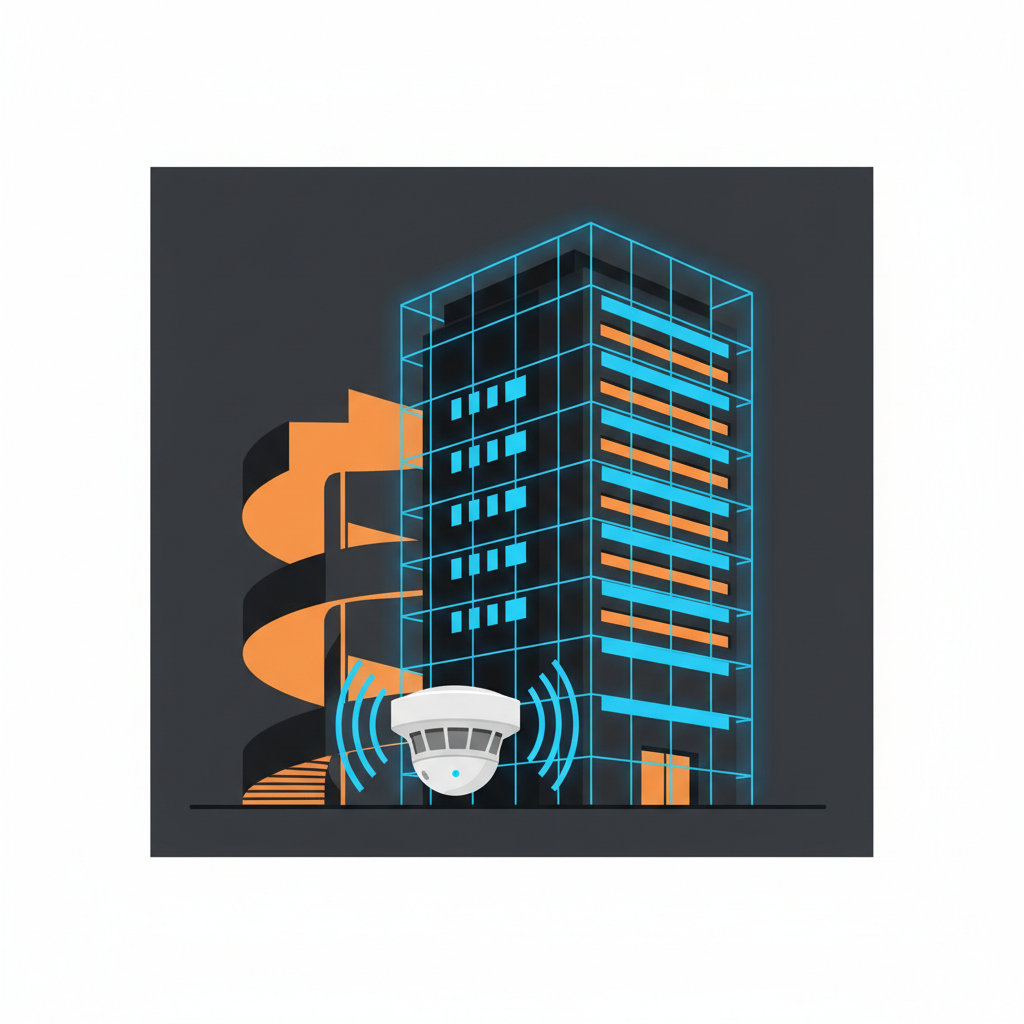
I love that he brought up his Zigbee smoke detectors and the whole smart home integration. It is very Daniel to have a dashboard telling him the battery levels of every sensor in the house. But as we move into twenty twenty-six, the tech is changing fast. We are seeing a massive shift toward the Matter protocol, specifically Matter-over-Thread, which is making these devices much more reliable than the old Zigbee setups. But as much as I love the tech side, fire safety is one of those areas where the physical, old-school mechanics are just as important as the digital alerts. We should really break this down into the three pillars: detection, suppression, and escape.
Let us start with detection because that is the first line of defense. Daniel mentioned he has three smoke detectors in a sixty to seventy square meter apartment. One in the office, one in the bedroom, one in the living room. Is that overkill, or is he on the right track?
He is actually pretty much spot on. The general rule of thumb from the N-F-P-A—that is the National Fire Protection Association—is a smoke detector in every sleeping room, outside every separate sleeping area, and on every level of the home. In a standard two-bedroom apartment, having three or four is perfect. But here is the thing most people do not realize: smoke detectors have a hard expiration date. It is not just the batteries. The actual sensors inside degrade over time.
I remember you mentioning this once when we were moving in. Most people think as long as the little red light is blinking or it chirps when you press the button, it is fine. But that is not the case, right?
Exactly. The industry standard is ten years. After ten years, you need to toss the whole unit and replace it. Inside most residential smoke detectors, you have one of two types of sensors: ionization or photoelectric. Ionization detectors use a tiny amount of radioactive material—Americium-two-forty-one—to ionize the air. When smoke enters the chamber, it disrupts the flow of ions and triggers the alarm. These are great at detecting fast-flaming fires, like a wastebasket fire. Photoelectric detectors use a light source and a sensor. When smoke enters, it scatters the light onto the sensor. These are better at detecting slow, smoldering fires, like a cigarette falling into a couch cushion.
So if the sensor is ten years old, does the radioactive material just run out, or does the light bulb burn out?
It is more about the accumulation of dust, microscopic spiders, and general environmental degradation. The sensitivity drops. By twenty twenty-six, many jurisdictions are actually phasing out ionization-only detectors in favor of photoelectric or dual-sensor models because smoldering fires are statistically more lethal in residential settings. And since many people do not know when their detectors were installed, you should look for a date of manufacture printed on the back. If it is older than a decade, it is basically a plastic wall ornament.
Daniel also mentioned he has a carbon monoxide sensor over the stove. Now, I have heard different things about where those should be placed. Is the kitchen the best spot?
This is a common misconception. While the stove is a potential source of carbon monoxide if it is malfunctioning, you actually do not want the detector right next to it. You will get nuisance alarms from tiny, non-lethal amounts of gas released during normal cooking. Carbon monoxide is slightly lighter than air, but it actually mixes very evenly with the air in a room. The most critical place for a carbon monoxide detector is near the sleeping areas. You want it to be loud enough to wake you up if a leak happens while you are asleep. If it is in the kitchen and you are at the other end of the hall with the door closed, you might not hear it until the levels are dangerously high. In fact, the new twenty twenty-six fire codes in many places now require C-O alarms in every room with a fuel-burning appliance and in every corridor serving sleeping areas.
That makes sense. It is about waking the person, not just monitoring the appliance. Now, let us talk about suppression. Daniel has a fire extinguisher and a fire blanket. He noticed his extinguisher says the pressure is good, but it is old. Is a "good" pressure gauge enough to trust your life with?
This is where I get a bit nerdy about the chemistry. Most home fire extinguishers are dry chemical extinguishers, usually containing monoammonium phosphate. It is a fine powder. Over years of just sitting on a bracket or in a cupboard, that powder can actually settle and pack down at the bottom of the canister. If you go to use it, the compressed nitrogen might blow out, but the powder stays stuck at the bottom like clumped flour.
Wait, so the gauge could show green, but nothing but air comes out?
Precisely. Or you get a pathetic little puff of powder instead of a powerful stream. This is why professionals recommend "tipping" your extinguisher every few months. You take it off the wall, turn it upside down, and maybe give the bottom a couple of firm taps with a rubber mallet or your palm. You should actually be able to feel the weight of the powder shifting inside. If it feels like a solid block, it is compromised.
And what about the lifespan? If it is ten years old but the pressure is green and the powder is loose, is it still okay?
For a disposable home extinguisher, twelve years is usually the limit. After that, the seals can become brittle. If you have a rechargeable one, you can have a pro service it every six years. But for most apartment dwellers, it is cheaper and safer to just buy a new one every decade. And honestly, for the cost of a few pizzas, having a fresh, reliable extinguisher is the best investment you can make.
You mentioned the different types of fires earlier. Most people just buy whatever is at the hardware store. Is there a specific type we should be looking for?
You want an A-B-C rated extinguisher. A is for ordinary combustibles like wood and paper. B is for flammable liquids like gasoline or oil. C is for electrical fires. In an apartment, you are likely to deal with any of those three, so an A-B-C multi-purpose extinguisher is the gold standard. However, if you are a serious home chef, you might also want a Class K extinguisher. Class K is specifically for high-temperature cooking oils and fats. Standard A-B-C extinguishers can actually struggle with deep-fryer fires because they do not provide the same cooling effect as the wet chemical agents in a Class K unit.
What about the fire blanket? Daniel mentioned he got one in the United States. I see those becoming more popular lately. Are they a replacement for an extinguisher?
They are a supplement, and a very good one, especially for the kitchen. If you have a pan fire, a fire blanket is often superior to an extinguisher because it does not create a massive mess and there is no risk of the high-pressure stream splashing burning oil out of the pan. You just pull the tabs, cover the pan, and turn off the heat. It starves the fire of oxygen. It is also great because it never expires and requires zero maintenance. But you cannot use a fire blanket on a fire that is already spreading up the curtains or into the cabinets. That is where the extinguisher comes in.
It sounds like the blanket is for the "oops, I left the fries too long" stage, and the extinguisher is for the "oh no, the kitchen is on fire" stage. I have also seen these "fireballs" lately—those spheres you throw into a fire and they explode with extinguishing powder. Are those a gimmick?
They are actually becoming quite legitimate. The G-F-O Fireball, for instance, is designed to trigger automatically when it touches a flame. They are great for high-risk areas like a server closet or behind a refrigerator where you might not be present when a fire starts. But again, they are a layer of defense, not a replacement for a handheld extinguisher that you can aim precisely.
Okay, so we have the gear. We have the detectors. But the biggest part of Daniel's question, and the part that I think scares people the most, is the escape plan. Especially here in Jerusalem, where we have a lot of older stone buildings and some very tall modern towers. If you are on the sixth floor or the twentieth floor, and the alarm goes off, your instinct is to run for the elevator. But every sign says "In case of fire, use stairs." Why is that so critical?
There are three huge reasons why elevators are death traps in a fire. First, the elevator shaft acts like a giant chimney. Smoke and hot gases are drawn into the shaft and rise rapidly. If the elevator doors open on a floor where the fire is active, the car can instantly fill with lethal smoke. Second, many elevators use light-sensing sensors to keep the doors open. If smoke obscures those sensors, the doors might stay open, trapping you on a floor that is burning. And third, the fire can damage the electrical system, causing the elevator to stall between floors. Being trapped in a metal box while the building burns around you is the absolute worst-case scenario.
So the stairs are the only way. But if you are on a high floor, that is a long way down, and you are potentially walking into the smoke that is rising up the stairwell. How do you factor that into a plan?
This is where we need to talk about "fire-rated" construction and a new reform that just went into effect here in Israel in January twenty twenty-six. All buildings, including high-rises, are now required to pass through certified inspection institutes to ensure their life safety systems are up to code. One of the most critical systems in a modern high-rise is the pressurized stairwell. These systems use massive fans to pump fresh air into the stairwell, creating a higher air pressure than the rest of the building. This literally pushes smoke back and keeps the escape route clear.
That is fascinating. So the building is actively fighting the smoke for you. But what about the doors? I see people propping those stairwell doors open all the time to get a breeze.
That is the biggest mistake you can make. If you prop that door open, you kill the pressure and allow smoke to flood the stairwell. Those doors are built to withstand intense heat for one or two hours. Their job is to keep the stairwell a "safe zone." If you see a propped-open fire door, close it. It is the simplest thing you can do to save lives.
So the first step of an escape plan is actually just being a good neighbor and making sure those stairwell doors are always closed. But what if you open your front door and the hallway is already full of smoke?
This brings up the concept of "defend in place" or "shelter in place." If you open your door and see thick, black smoke, do not run into it. You will be overcome by carbon monoxide in seconds. In that case, you close the door, seal the cracks with wet towels, turn off the air conditioning, and go to a window to signal for help. Fire doors on modern apartments are often rated for thirty to sixty minutes of protection. If the stairwell is clear, go. If the hallway is a wall of smoke, stay and protect your space until the fire department arrives.
That is a huge distinction. I think most people think "fire equals run." But in a high-rise, "fire equals assess, then move if safe." How do you know which one to do?
You check the door. Use the back of your hand to feel the door and the handle. If it is hot, do not open it. If it is cool, crack it an inch and look. If you see clear air, head for the stairs. If you see smoke, stay put. And here is a pro tip: if you do evacuate, take your keys! If you find the stairwell is blocked by smoke and you need to retreat to your apartment, you do not want to find yourself locked out in a smoky hallway.
I would totally forget my keys in the panic. I am also thinking about the "Go Bag" concept. Should we have a bag by the door with essentials?
Absolutely. A small bag with your passport, essential medications, a flashlight, and maybe a smoke hood. A smoke hood is a portable filtration device that gives you fifteen to twenty minutes of breathable air in a smoky environment. It is not a SCUBA tank, but it can be the difference between making it down twenty flights of stairs and collapsing from smoke inhalation.
Daniel mentioned his Zigbee setup again. One thing I like about smart detectors is that if the kitchen detector goes off, I can have it trigger an alert on my phone or a smart speaker in my bedroom. In a big apartment, you might not hear a standard alarm through two closed doors until the smoke is already thick.
That is a massive advantage of interconnected alarms. In the old days, you had to hard-wire them together. Now, with Matter-over-Thread, they can talk to each other wirelessly across different brands. If Daniel's living room detector senses smoke at three in the morning, the one right next to his head in the bedroom will start screaming immediately. Those extra thirty seconds of warning are the difference between a calm evacuation and a panicked scramble. But we should probably give a disclaimer about the reliability of smart home hubs in a fire.
Right. You should never rely only on the smart features. The detector itself must have a built-in physical siren that works independently of your internet, your Wi-Fi, or your smart hub. If the power goes out or the router burns up, that detector still needs to be able to wake you up. Daniel's setup is great as an "extra" layer, but the core safety has to be local and battery-backed.
And speaking of batteries, many modern detectors now come with ten-year sealed lithium batteries. You never have to change the battery for the life of the unit. When it starts chirping after a decade, you just replace the whole thing. It eliminates the risk of someone taking the battery out to stop a nuisance alarm and forgetting to put it back.
Let us circle back to maintenance. We talked about the ten-year replacement for detectors and the twelve-year for extinguishers. But what about the monthly stuff? Daniel's dashboard shows him battery levels, but should he still be pushing the buttons?
Yes. Once a month, press the test button. It ensures the circuitry and the siren are functional. And once a year, you should actually test the sensor. You can buy "smoke in a can" which is an aerosol that simulates smoke particles. Spraying that near the detector confirms that the sensor is actually "seeing" the smoke. I have seen detectors that passed the button test but failed the actual smoke test because the sensor was clogged with dust or grease.
And for the apartment dwellers who are renting, like many of us are. Is it the landlord's job to provide these?
In many jurisdictions, yes, the landlord is legally required to provide working smoke detectors. But honestly, even if they are required, do you want to trust your life to the cheapest five-dollar sensor the landlord could find? I always tell people to buy their own high-quality photoelectric detectors and take them with them when they move. It is a small price for peace of mind.
I want to go back to the high-floor escape plan for a second. We talked about the stairs, but what about people with limited mobility? If you cannot walk down twenty flights of stairs, what does the "escape plan" look like then?
This is a critical point. If you or someone you live with has mobility issues, you need to inform the building management and the local fire department ahead of time. Many modern buildings have "areas of refuge" which are reinforced, smoke-protected spots usually near the elevator lobby or stairwell where people can wait for firefighter assistance. But the most important thing is communication. If a fire starts, the first thing you do is call emergency services and tell them exactly which apartment you are in and that you cannot use the stairs. They prioritize those rescues.
It feels like the recurring theme here is that fire safety isn't just a "set it and forget it" thing. It is a posture. It is about knowing your environment. I am thinking about our own building now. I know where the main stairs are, but I honestly haven't looked for the secondary exit in months.
It is easy to get complacent when you walk past those heavy fire doors every day. You start seeing them as part of the furniture. But next time you are coming home with groceries, just take a second. Look at the door. Is it closed? Is the handle clear of obstacles? Does the "Exit" sign actually light up? If it doesn't, tell the building manager. That little light might be the only thing you can see in a dark, smoky hallway.
Let us talk about the second-order effects of fire safety. We have talked about the physical danger, but there is also the water damage. In many apartments, the sprinklers are what actually save the building, but they ruin everything you own.
This is why I'm a big advocate for fire-resistant safes or even just off-site backups for your most important documents. If the apartment upstairs has a kitchen fire and the sprinklers go off, your apartment might not burn, but you are going to have thousands of gallons of water coming through your ceiling. Your birth certificate, your passport, your old photos... if they aren't in a waterproof, fire-rated box, they are gone.
And that brings us back to Daniel's smart home. If he has a water leak sensor on the floor, he might get an alert that the sprinklers are going off before the fire even reaches him. It is all about layers of information.
Exactly. Information is the antidote to panic. When you have a plan, when you know your gear is tested, and when you know your exits, your brain stays in "analytical mode" instead of "panic mode" during an emergency. That is how you make the right decisions, like grabbing your keys or checking the door for heat.
So, to summarize for Daniel and everyone else living the apartment life. One: Every home absolutely needs an A-B-C fire extinguisher and a fire blanket in the kitchen. Consider a Class K if you do a lot of frying. Two: Smoke detectors are ten-year items. If they are older, they are trash. Three: Test the physical sensor with smoke-in-a-can, not just the battery. Four: The stairs are your only friend, but only if the air is clear. Otherwise, stay put and seal the door.
And five: Know your neighbors. In a fire, you might be the one helping the elderly person down the hall or the family with the new baby. Fire safety in an apartment is a team sport.
I love that. We are all in this vertical ship together. If one person's toaster goes rogue, it affects us all. It really reinforces that sense of community, even if it is born out of a shared risk.
It really does. And honestly, doing a "fire drill" once a year feels silly until you actually need it. I think after we finish this recording, we should go walk the back stairwell of our building, just to see what is back there.
You are on. I bet there is a bunch of old bicycles blocking the way.
And that is exactly why we need to check! If those bikes are blocking the exit, that is a hazard we need to fix today, not when the alarm is screaming.
Well, this has been a really grounding discussion. It is easy to focus on the flashy tech, but the basics of fire safety are what actually save lives. Daniel, thanks for the prompt. It definitely motivated me to be more proactive about our own setup.
Same here. And to all our listeners, seriously, go check the date on your smoke detector right now. If it was made in two thousand sixteen, you are on the clock. If it was made in two thousand fourteen, you are overdue.
And if you found this helpful, or if you have your own fire safety tips or "near-miss" stories you want to share, we would love to hear them. You can always reach out through the contact form at myweirdprompts.com.
And hey, if you have been listening for a while and haven't left us a review yet, we would really appreciate it. A quick rating on Spotify or your favorite podcast app helps other people find the show and join our weird little community.
It really does help. We are available on Spotify and all the major platforms. You can find our full archive and the RSS feed at myweirdprompts.com. We have over four hundred episodes now, covering everything from elevator history to the physics of toast.
Which, ironically, is a leading cause of kitchen fires.
Exactly! Stay safe out there, everyone. Thanks for listening to My Weird Prompts.
Until next time, keep those fire doors closed!
See ya.