Hey everyone, welcome back to My Weird Prompts. I am Corn, and I am sitting here in our living room in Jerusalem with my brother, the man who spent his entire morning reading about the history of maritime shipping containers and the specific structural integrity of corrugated steel, but somehow still has time to record this show with me.

Herman Poppleberry at your service. And to be fair, Corn, the transition from break-bulk shipping to containerization is one of the most underrated revolutions of the twentieth century. It is the reason you can have a banana in the middle of winter or a car that was assembled in four different countries. But today, we are looking at a much more modern, much more digital version of that revolution. We are moving from the world of twenty-foot equivalent units to the world of individual bubble mailers.
We definitely are. Today's prompt comes from Daniel, a long-time listener who is currently obsessed with the logistics of AliExpress. He recently ordered a four dollar CPU bracket—basically a tiny piece of metal and plastic—and it made the journey from a factory in China to his door here in Jerusalem in just eight days. He wants us to unpack the typical journey of an AliExpress product, breaking down those cryptic tracking statuses like consolidation warehouses, sorting centers, and export customs. He wants to know how the math even works for a four dollar item.
It is a fantastic prompt because that eight day window is actually a massive achievement of engineering and data science. If you had ordered that same four dollar part five or six years ago, you would have been lucky to see it in six weeks. It would have spent a month just sitting in a dusty warehouse in Shenzhen or on a slow boat crossing the Indian Ocean. The fact that it is now happening in almost a week for a four dollar item is a testament to what we call the smart logistics revolution. We are currently in February of twenty-six, and the efficiency we are seeing now would have looked like science fiction a decade ago.
Right, and it is funny because Daniel mentioned he usually does not even look at the tracking unless it is a big purchase, like a new phone or a high-end camera. But for this four dollar part, he actually followed the breadcrumbs because he was so shocked by the speed. And those breadcrumbs are fascinating. Let us start at the very beginning. The order is placed on February fourteenth, Valentine's Day. The first status is package being prepared. That seems straightforward, right? That is just the seller putting the bracket in a bag?
Mostly, yes. But even that first step is far more integrated than it used to be. Most high-volume AliExpress sellers are now part of the Cainiao network. For those who do not know, Cainiao is the logistics arm of Alibaba, and they have basically built a digital nervous system that connects thousands of small manufacturers and millions of individual products. When Daniel clicks buy, the seller gets a notification, but so does the Cainiao central brain. The seller prints a label that is already pre-coded for the entire international journey. They are not just writing an address on a box; they are entering the item into a global flow. This is what we call the digital twin of the package. Before the physical bracket even moves, its digital ghost has already reserved a spot in a warehouse and a sliver of space on a cargo plane.
So the seller bags it up, and then it goes to a consolidation warehouse. This is a term I see all the time now. It says the package left the warehouse and went to a consolidation warehouse. What is actually happening there? Because a four dollar bracket cannot possibly justify its own shipping cost from China to Israel. The fuel alone for a single flight would cost more than a thousand of those brackets.
Exactly. That is the secret sauce. In the old days, that seller would have taken the package to a local post office in, say, Dongguan or Shenzhen. It would have been treated as a single, tiny international parcel. That is expensive, slow, and prone to getting lost. Now, Cainiao operates these massive, highly automated consolidation hubs. The AI at the heart of this system is looking at thousands of orders coming from different sellers but heading to the same destination region—in this case, Israel.
So it is like carpooling for packages?
It is exactly like carpooling, but on a scale of millions. The system waits until it has enough volume to fill a larger container. But here is where the AI gets really clever. It is not just grouping by country; it is grouping by shipping tier and even by customer. Daniel mentioned he gets free shipping over twelve dollars by ordering a few things at once. When you do that, the consolidation warehouse might actually open your individual packages from different sellers and put them into one single larger bag. This is called smart order consolidation. It reduces the number of individual scans and labels that need to be processed later in the journey. It turns ten small problems into one medium-sized problem. Even if you only order one thing, your item is bundled with thousands of others into a large sack, which is then tracked as a single unit.
That explains why sometimes I get a big gray plastic bag, and inside are three smaller bags from different stores. It is like a Russian nesting doll of e-commerce. But Daniel's bracket was just one item. So it goes from consolidation to the sorting center of origin. That sounds redundant to me. Is it not already sorted if it is in the consolidation warehouse?
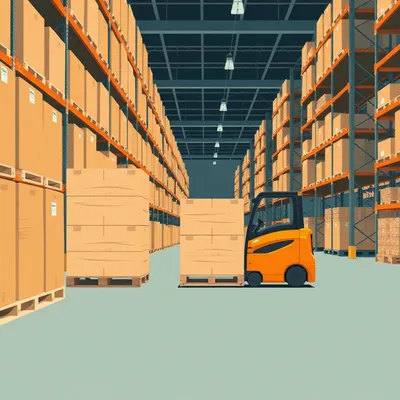
Not quite. Think of the consolidation warehouse as the place where the atoms are gathered. The sorting center is where the logistics logic is applied at high speed. This is where the high-speed conveyor belts and optical character recognition systems come in. These centers can process millions of packages a day. At this stage, the system is deciding which air corridor this package will take. Is it going through a hub in Liege, Belgium? Is it going through Dubai? Or is it a direct flight to Tel Aviv? In twenty-twenty-six, Cainiao has established what they call the global five-day delivery logic for key markets. They are looking for the absolute fastest route available in the next six hours.
Daniel's tracking says it hit the origin sorting center, left it, and then arrived at the origin airport all within about twenty-four hours. That is incredibly fast considering the scale. But then we hit a status that always confuses people: export customs. Daniel asked why China cares about what is leaving. If someone is buying a four dollar bracket, why does the Chinese government need to clear it? Are they worried about a bracket shortage?
It is a great question. Export customs serve a few vital purposes. First, there is security. Even though it is a tiny package, they need to ensure no prohibited items are leaving, like certain types of high-capacity lithium batteries that are not declared, or restricted dual-use technologies. Second, it is about trade data and taxes. China's economy is built on these exports, and the government needs accurate data on the volume and value of goods leaving the country to manage their trade policy. There is also a specific customs regime in China called ninety-six-ten. This is a special code for cross-border e-commerce that allows for simplified, bulk clearing of small parcels. It is designed specifically for companies like AliExpress and Temu.
But Daniel noticed it only took about an hour and twenty minutes to clear export customs. That does not sound like a guy in a green uniform opening boxes and peering inside with a flashlight.
Oh, definitely not. This is almost entirely digital. Cainiao and the Chinese customs authorities have an integrated system. The manifest for the entire consolidation container is sent electronically. The AI flags any anomalies based on weight, declared value, or the history of the seller. If everything looks standard, it is cleared in bulk. It is a green channel system. They are looking for the needle in the haystack, and Daniel's CPU bracket is definitely just more hay. If the weight on the scale matches the weight on the digital manifest, the computer gives it a thumbs up and it moves to the tarmac.
So after customs, we get the status: awaiting flight. Daniel had a funny image of his little bracket sitting in a departure hall with a tiny suitcase, maybe getting a coffee. But in reality, it is in one of those big metal containers, right? You mentioned the name earlier when we were talking about maritime shipping, but these are different.
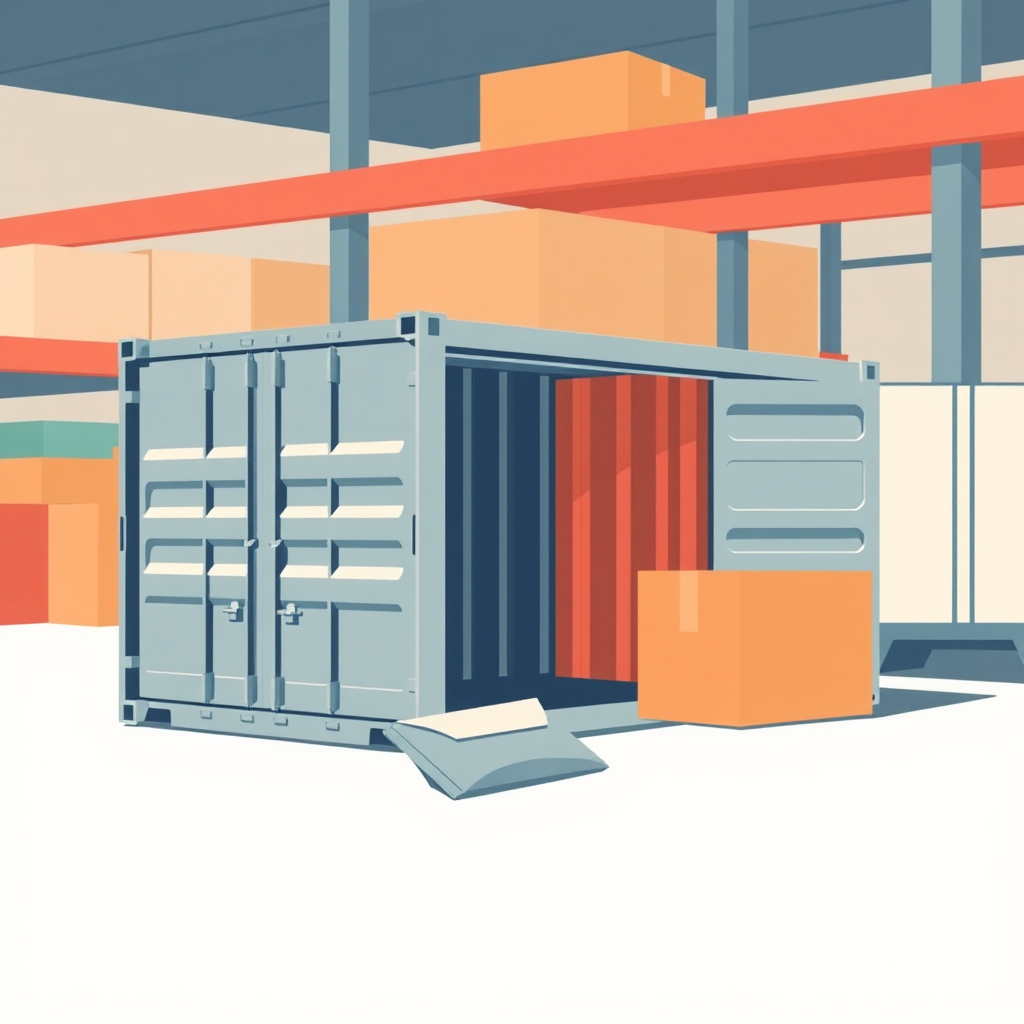
Yes, for air freight, they are called Unit Load Devices, or ULDs. If you have ever looked out the window at an airport and seen those oddly shaped silver boxes with one corner cut off, those are ULDs. They are designed to fit perfectly into the curved hull of an airplane. For international air freight at this scale, AliExpress uses a mix of dedicated cargo planes—Cainiao actually charters hundreds of flights a month—and what we call belly cargo on passenger flights.
Wait, so my bracket might be flying underneath a bunch of tourists heading to a vacation spot?
Absolutely. That is how the cost stays so low. Airlines sell that extra space in the hold to logistics companies. It is essentially found money for the airline. Cainiao has long-term contracts where they pre-purchase space on hundreds of flights a day. The AI calculates the most efficient route. If there is a flight with empty space leaving Hong Kong for Tel Aviv, that bracket gets routed there. If not, maybe it goes to Istanbul first and hops on a connecting flight. The goal is to keep the atoms moving. A package sitting on the ground is a package losing money.
This is where the eight-day miracle really happens. Daniel noticed that between awaiting flight and arriving at the local airport, there was a gap where the tracking gets a bit murky. He saw import customs clearance started before the package even seemed to leave China. How is that possible? Is it time travel? Or just bad data?
It is actually digital pre-clearance, and this is one of the biggest bottlenecks they have solved in the last few years. In the old world, the plane would land, the bags would be unloaded, and only then would the customs forms be handed to the local authorities. It was a sequential process. Now, the moment that plane takes off from Shenzhen or Hong Kong, the entire digital manifest is beamed to the Israeli customs authorities.
So they know exactly what is on the plane before it even enters Israeli airspace?
Exactly. By the time the wheels touch down at Ben Gurion Airport, the vast majority of those packages have already been cleared by the computer. The Israeli customs system looks at the declared value—in this case, four dollars. Since it is well below the seventy-five dollar tax-free threshold in Israel, the computer just gives it a digital thumbs up. That is why Daniel saw import customs clearance completed in just fifteen minutes. It was never even touched by a human. The system only flags packages that are over the value threshold or those that come from high-risk senders.
That is wild. So the physical package is still being unloaded from the ULD by a ground crew, but in the digital world, it has already passed the border and is legally inside the country.
Precisely. This integration between the logistics provider and the national customs agency is what turned a three-week process into a three-hour process. It is all about moving the data faster than the atoms. If the data arrives five hours before the atoms, the atoms can move through the port without stopping.
Okay, so now it is in Israel. It has cleared customs. The tracking says: arrived at local delivery center. This is the last mile, which everyone says is the hardest and most expensive part of the whole journey. How does it get from the airport to a locker or a shop in Jerusalem?
This is where AliExpress has completely changed their strategy in the last few years. They used to rely entirely on the national postal services, like Israel Post. As many of our local listeners know, the post office has historically been a bit of a black hole for small packages. You would get a paper slip in your mailbox three weeks after the package arrived, and then you would have to wait in line at a branch that was only open between ten and two.
I remember those days. It was agonizing. You knew the package was in the city, but you could not get to it.
Exactly. To solve this, Cainiao now partners with private last-mile delivery companies and local pickup networks. These companies have their own sorting hubs. The package goes from the airport to a regional hub, where it is sorted by zip code using similar high-speed belts. But instead of a mailman bringing it to your door—which is very expensive—they drop it off at a PUDO point. That stands for Pick Up Drop Off.
And Daniel got a WhatsApp message saying his package was ready. That is a huge shift from the old paper slip.
It really is. That WhatsApp message is the final link in the digital chain. The delivery company scans the package into a specific locker or at a local pick-up point—usually a grocery store, a pharmacy, or a twenty-four-hour kiosk—and that scan triggers an automated message to the customer's phone with a QR code. The whole chain is closed. From the moment the seller in China bagged that bracket to the moment Daniel scanned his phone at the shop in Jerusalem, every single step was logged, timed, and optimized by an algorithm.
It is impressive, but I have to go back to the economics. This is a four dollar part. It traveled seven thousand miles, went through at least four warehouses, flew on a plane, and was handled by a local delivery company. How does anyone make money on this? Is the seller making like, two cents?
It is a game of extreme scale and marginal costs. When you are moving millions of items, the cost per item for that air freight might only be forty or fifty cents. The cost for the automated sorting might be five or ten cents. The seller is probably making a very thin margin, maybe fifty cents or a dollar, but they are selling to the entire world. Alibaba's goal is not necessarily to make a huge profit on every four dollar bracket; it is to make their ecosystem the default way the world shops. They want to make the friction of buying from a factory in China lower than the friction of driving to a mall in your own city. They are playing a long game of market dominance through logistics.
It definitely feels that way. I mean, eight days is faster than I can sometimes get things from local sellers if they are out of stock and have to order from their own distributors. But what about the environmental cost? Daniel mentioned his misgivings about sustainability. Shipping a tiny piece of plastic or metal halfway around the world in eight days via air freight has to have a massive carbon footprint compared to, say, sea freight or buying something locally made.
You are absolutely right, and that is the dark side of this efficiency. Air freight is significantly more carbon-intensive than sea freight—we are talking about twenty to thirty times more CO2 per ton-mile. By normalizing eight-day delivery for trivial items, we are essentially subsidizing environmental damage for the sake of convenience. AliExpress would argue that their consolidation AI makes the process as efficient as possible—ensuring planes are always full and routes are optimized so no fuel is wasted on half-empty holds—but at the end of the day, you are still flying a four dollar bracket across the planet. There is no way to make that truly green with current technology.
It is a tough trade-off. We have become accustomed to this magic. I remember in the early two thousands, ordering something from overseas felt like a leap of faith. You sent your money into the void and hoped that in two months, a battered box would show up. Now, we feel genuinely annoyed if it takes more than ten days. Our internal clocks have been reset by these algorithms.
Our expectations have been completely recalibrated. And that is because the logistics companies have turned into data companies. They realized that the physical movement of goods is a solved problem; the real challenge was the information flow. By solving the tracking, the customs data, and the consolidation logic, they removed the uncertainty. And once you remove uncertainty, you can increase speed. If you know exactly where a package is and where it is going, you can move it much faster than if you are constantly stopping to check its paperwork.
Let us talk a bit more about the sorting centers because Daniel was curious about that origin sorting center status. I saw a video once of these robots in a Chinese warehouse. They look like little orange Roombas carrying packages on their backs. Is that what Daniel's bracket went through?
Almost certainly. Those are called Autonomous Mobile Robots, or AMRs. In a modern Cainiao sorting center, you have thousands of these robots scurrying across a mezzanine floor. Each one carries a single package. The robot scans the destination on the label using a downward-facing camera and knows exactly which chute to drop the package into. It is a mesmerizing ballet. They never collide, they never get tired, and they go to charge themselves when their battery is low. This level of automation is why the package can leave the consolidation warehouse and be ready for the airport in a matter of hours. There are no humans walking around with clipboards. It is just a sea of orange robots and the hum of conveyor belts.
And I imagine the AI is also predicting demand? Like, does it know that in February, there might be a spike in people ordering computer parts in Israel for some reason?
It does. They use predictive analytics to pre-position high-demand items in warehouses closer to the destination. While Daniel's bracket came from China, many popular items are now stored in overseas warehouses in places like Spain, Poland, or even regional hubs in the Middle East. This is the next phase of their plan—moving the goods before the customer even clicks buy. They call it anticipatory shipping.
That is the ultimate goal, right? Imagine Daniel thinking about a CPU bracket and it just showing up at his door because an algorithm predicted his motherboard would fail. That is a bit terrifying.
We are not quite there yet, but the data they have is certainly heading in that direction. They know the lifecycle of electronics. They know when people are likely to be upgrading their systems based on their previous purchase history. They can nudge sellers to move inventory to specific hubs based on those predictions. It is about collapsing the distance between the factory and the front door until it feels instantaneous.
It is fascinating to think about the journey of such a simple object. It is just a piece of metal, but it required a global infrastructure of satellites, fiber optic cables, massive cargo planes, and thousands of robots to get to Jerusalem in eight days. It makes you realize that when we talk about the internet, we usually think about pixels and data, but the most impressive part of the internet might actually be how it moves physical things.
I agree. It is the physical manifestation of the internet. We have spent decades building the digital pipes, and now we are using those pipes to control the physical world. The CPU bracket is just a tiny data packet in a much larger physical network. It follows the same logic as an email—it is broken down, routed through the most efficient nodes, and reassembled at the destination.
So, to recap for Daniel and everyone else following their tracking numbers: package being prepared is the seller getting the digital green light. Consolidation is the carpooling phase where your item meets its travel buddies. The origin sorting center is the robot ballet. Export customs is the digital handshake with the government. Awaiting flight is the ULD tetris in the belly of a plane. And import customs is the pre-clearance magic that happens while the plane is still in the air.
And the last mile is the handoff to a local partner who hopefully sends you a WhatsApp instead of a paper slip. It is a complex, multi-layered system that relies on every single part working in perfect synchronization. When it works, it feels like magic. When it fails—like when a package gets stuck in a sorting center for a week—it is usually because one of those digital handshakes did not happen correctly. Maybe a label was smudged, or a server went down, and the physical object became invisible to the digital system.
It is amazing that it works as often as it does. I mean, think about the number of potential points of failure. A label could get torn, a robot could malfunction, a plane could be delayed by weather, a customs officer could decide to do a random manual check. The fact that the baseline is now eight to ten days is a staggering achievement of engineering and coordination. It really highlights how much the world has shrunk.
It really has. And for those of us in Israel, it has completely changed our relationship with the global market. We used to be at the end of a very long, very slow tail. We were an island, logistically speaking. Now, we are part of the main flow. That has huge implications for local businesses, too, who now have to compete with a factory in Shenzhen that can deliver to their customers' door in a week for a fraction of the price.
That is a whole other episode, I think—the impact of this hyper-efficiency on local economies and the retail landscape. But for today, I think we have given Daniel a pretty good map of his bracket's journey. It is a four dollar part with a million dollar story.
Well said. It is easy to take it for granted, but every time you open one of those gray plastic bags, you are looking at the result of one of the most complex systems ever built by humans. It is the culmination of centuries of trade theory, decades of computer science, and an incredible amount of physical labor.
Well, if you have been enjoying our deep dives into the weird and wonderful prompts Daniel and our other listeners send our way, we would really appreciate it if you could leave us a review on your favorite podcast app. Whether it is Spotify, Apple Podcasts, or anywhere else, those ratings really help new listeners discover the show. We have been doing this for over eight hundred episodes now, and it is the community that keeps us going.
It really does. We love hearing your feedback and seeing how these topics resonate with you. If you have a tracking status that is driving you crazy, or a logistics question that keeps you up at night, send it our way.
You can find all our past episodes, our category taxonomy, and a contact form at myweirdprompts dot com. We also have an RSS feed there for the subscribers who like to keep it old school. If you want to reach us directly, you can email us at show at myweirdprompts dot com.
This has been My Weird Prompts. I am Herman Poppleberry.
And I am Corn. Thanks for listening, and we will talk to you in the next one. Goodbye!
Goodbye!