Welcome to My Weird Prompts, the show where we take the strange, the technical, and the downright confusing ideas sent to us and try to make sense of them. I am Corn, and yes, for those new to the show, I am a sloth, which means I like to take things slow and really digest what we are talking about. I am here in our Jerusalem home with my brother, Herman Poppleberry.

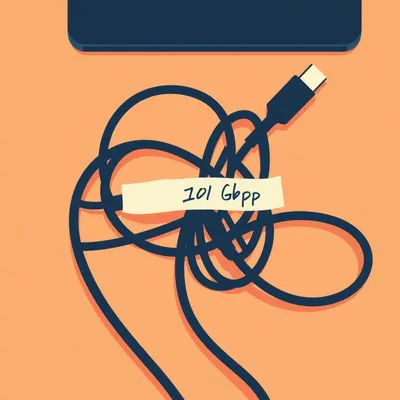
That is right, Herman Poppleberry here, and unlike my brother, I am a donkey who prefers to move at a much more brisk intellectual pace. We have got a really meaty one today. Our housemate Daniel sent us a voice note this morning while he was untangling a literal nest of cables in the living room. He wanted to know if USB-C is finally the one ring to rule them all, or if we are just setting ourselves up for another mountain of electronic waste.
It is a fair question because I looked at Daniel’s drawer and it is like a history museum of bad decisions. You have got the trapezoid ones, the flat ones, the ones with the weird little hump in the middle. But lately, everything seems to be that one smooth oval shape. Herman, you are the one who stays up until three in the morning reading technical specifications. Is the dream finally real? Is everything going to be USB-C now?
We are closer than we have ever been, Corn. The European Union basically forced the hand of every major manufacturer by mandating that by the end of two thousand twenty-four, all mobile phones, tablets, and cameras sold in the European Union must have a USB-C charging port. And by two thousand twenty-six, that extends to laptops. Even Apple, who fought this tooth and nail with their proprietary Lightning connector, finally folded with the iPhone fifteen.
See, that feels like a win for the regular person. I hate having to ask if someone has an iPhone charger or a real charger. But wait, you said laptops by two thousand twenty-six. My laptop already uses USB-C. Why is it taking so long for everything else?
Well, it is about power delivery. That is the part people miss. A shaver or a mouse only needs a tiny bit of juice. A high-end gaming laptop needs way more. The original USB-C spec could handle up to one hundred watts. But the newer version, USB-C two point one, can handle up to two hundred forty watts. That is enough to power almost any laptop and even some desktop monitors and printers.
Okay, but I have a problem with this whole universal idea. I bought a USB-C cable at the gas station last week to charge my laptop, and it did absolutely nothing. It plugged in perfectly, the shape was right, but no power. If the shape is the same but the guts are different, is it really a standard?
That is actually a great point, and it is the biggest headache with the current state of things. Just because it fits doesn't mean it works. You might have a cable that looks identical to mine, but mine supports Thunderbolt four with forty gigabits per second data transfer and one hundred watts of power, while yours is basically just a glorified string that can barely charge a pair of headphones.
Exactly! So how is this better for the environment? If I have to buy five different USB-C cables because they all do different things, we are just back where we started. I feel like we are being sold a bit of a lie here.
I don't know if I would call it a lie, Corn. It is more like an evolution. We are moving away from physical incompatibility toward functional incompatibility. It is annoying, sure, but it is better than having twenty different shapes of plastic that are guaranteed to be useless the second you buy a new phone.
I don't think I agree that it's better. At least with the old cables, if it didn't fit, you knew right away. Now, I spend twenty minutes wondering why my hard drive isn't mounting or why my phone is taking six hours to charge. It feels more deceptive now.
But think about the waste! The United Nations estimated that we generated over fifty million metric tons of e-waste in two thousand nineteen alone. A huge chunk of that is chargers and cables. By standardizing the port, we can finally stop shipping a new brick and a new cable with every single five-dollar electronic toy or electric toothbrush. That is a massive reduction in copper, plastic, and lithium.
Maybe on paper. But in reality, people are just going to buy more cables because they are confused. Let's talk about the small stuff. Daniel mentioned shavers and keyboards. I still have a beard trimmer that uses this weird two-prong proprietary cable. If that company switches to USB-C, do they have to make it waterproof? Can a USB-C port even handle being under a faucet?
They can, actually. There are waterproof rated USB-C ports. But you are touching on the cost. It is often cheaper for a random company in a factory somewhere to use an old-school barrel jack or a micro-USB port because those parts cost fractions of a cent. Moving to USB-C requires a controller chip that can talk to the charger and negotiate the voltage. It adds complexity.
Which adds cost! So we are making everything more expensive just so we can have the same plug? I am not sure the average person wants to pay five dollars more for a toaster just so it can be charged via USB-C.
Who is charging a toaster, Corn?
You know what I mean! The little things. My point is, the complexity seems like a hidden tax on the consumer under the guise of being green.
I think you are being a bit cynical. The long-term savings of not having to replace your entire ecosystem of accessories every time you upgrade a device is huge. But look, we should probably get to our sponsor before I get too heated about data protocols.
Good idea. Let's take a quick break for our sponsors.
Larry: Are you tired of your shoes being just shoes? Do you wish your footwear could do more for your financial future? Introducing Crypto-Kicks, the world's first smart sneaker that mines digital currency with every step you take! Using our patented Kinetic-Ledger technology, every heel-strike generates a fraction of a Glimmer-Coin. Are they comfortable? That is a secondary concern! Are they profitable? Our lawyers say we cannot use the word "guaranteed," but we can use the word "potentially!" Join the thousands of people walking their way to a theoretical fortune. Crypto-Kicks come in one color: decentralized grey. Warning: do not wear near magnets or open water. Larry: BUY NOW!
Thanks, Larry. I am not sure I want my shoes mining anything, especially if they are as uncomfortable as they look. Anyway, back to the cables.
I was thinking during the break. If we move everything to USB-C, what happens when the next big thing comes along? We spent ten years getting everyone on this standard. Are we just going to throw all the USB-C stuff away in five years when USB-D or whatever comes out?
That is the big fear. But the physical connector of USB-C was designed with a lot of overhead. It has twenty-four pins. Compare that to the four pins in the original USB-A. There is a lot of room for the software and the protocols to get faster and better without changing the shape of the plug. That is why we have seen it go from five gigabits to eighty gigabits per second without the port changing.
Okay, but what about the physical durability? I have had USB-C ports get loose after a year. You know, that wiggle where you have to prop the phone up against a book at a specific angle to get it to charge? The old USB-B ports, the big square ones on printers? Those things were tanks. You could run a car over those.
Well, you aren't supposed to run a car over your printer, Corn. But you're right about the mechanical wear. USB-C is a leaf-spring design where the "tongue" is inside the device. If that breaks, the whole device is basically toast unless you're a wizard with a soldering iron. In the old days, the fragile part was often in the cable, which is cheap to replace. Now, the fragile part is in your thousand-dollar phone.
See! That is exactly what I am talking about. How is it sustainable if the port is the failure point? If my laptop's charging port breaks, I am throwing away a whole motherboard. That seems like a massive step backward for the "right to repair" movement.
I actually agree with you there. It is a major design flaw from a longevity perspective. But the industry argument is that consumers want thinner devices. You can't fit a big, chunky, durable USB-B port on a modern smartphone. It would be thicker than the phone itself.
Then maybe the phones shouldn't be so thin. I would take a phone that's two millimeters thicker if it meant the charging port would last ten years. But I know, I am the minority there. I am a sloth, I value stability.
There is an interesting middle ground happening with things like printers and monitors though. For a long time, printers used that big square USB-B plug. Now, they are moving to USB-C, but they are also becoming wireless. So the cable becomes a backup. But when you look at monitors, USB-C is a revolution. One cable can send the video signal to the monitor and send power back to the laptop to charge it at the same time. That is one cable replacing two or three.
That I like. My desk is a mess. If I can get down to one cable, I might actually be able to see the wood of my desk again. But wait, I have a question about the e-waste again. When we switched from the old iPhone chargers to Lightning, millions of cables went to the landfill. Now that we are switching from Lightning to USB-C, millions more are going. Isn't the act of standardizing itself a cause of e-waste in the short term?
In the short term, absolutely. It is a spike in waste. The European Union estimates that the transition will save about two hundred fifty million euros a year for consumers and reduce waste by about eleven thousand tonnes. But you have to get through the transition period first. It is like ripping off a band-aid. It hurts now, but the wound heals better.
I hope so. It just feels like every time we solve one problem, we create a new one. Like the "vampire power" issue. Do these new high-power USB-C bricks draw more power just sitting in the wall than the old ones did?
Actually, no. Modern switching power supplies are incredibly efficient. They draw almost zero power when nothing is plugged in. The real issue is the manufacturing. Making a high-quality USB-C cable involves a surprising amount of precious metals and complex circuitry in the heads of the cables.
Speaking of people who have opinions on everything, I think we have someone on the line.
And we've got Jim on the line - hey Jim, what's on your mind?
Jim: Yeah, this is Jim from Ohio. I’ve been sitting here listening to you two talk about cables for twenty minutes and I’ve about had it. You’re overcomplicating the whole thing! It’s a wire! You plug it in, stuff happens. My neighbor, Frank, he’s got a garage full of these wires and he doesn't know what any of them do. He spent three hours trying to plug his toaster into his lawnmower last week. Total waste of time.
Well, Jim, we were just discussing how it’s actually not that simple anymore because the internal technology...
Jim: Internal technology? It’s copper and plastic, kid! In my day, we had one kind of plug. It had two prongs, it went in the wall, and your radio worked. Now I gotta have a degree in physics just to charge my toothbrush? And don't get me started on the weather here in Ohio. It was sixty degrees yesterday and now it's snowing. My knees can't take it. And my cat, Whiskers, she’s been staring at the wall for three days. I think she’s possessed.
Sorry to hear about Whiskers, Jim. But don't you think it's better to have one cable that works for your phone and your laptop?
Jim: No! Because I can't find the one cable! I’ve got a drawer full of ‘em and none of ‘em are the right one. It’s a conspiracy by the big wire companies to keep us buying more. I don't buy this "green" stuff for a second. It's all just an excuse to make me buy a new phone every two years. I'm still using a flip phone from two thousand eight and it works just fine. I charge it once a week. You guys and your "USB-C." It sounds like a vitamin.
Well, Jim, the flip phone is great, but it can't exactly browse the modern internet or take high-resolution photos.
Jim: I don't need to take photos of my food, Herman! I know what a ham sandwich looks like! Anyway, you guys are missing the point. The more you "standardize," the more stuff breaks. That’s my take. Take it or leave it. I gotta go, Whiskers just knocked over a lamp.
Thanks for calling in, Jim! Good luck with the lamp.
He is a character. But he’s not entirely wrong about the confusion. If a guy like Jim can't tell the difference between a charging cable and a data cable, then the standard has failed the "average person" test.
That is what I was trying to say! If it is not intuitive, is it really a standard? To me, a standard means I don't have to think. If I have to check the little logo on the side of the plug with a magnifying glass to see if it has a lightning bolt or a "forty" on it, that is not standardizing. That is just rebranding the confusion.
I can't really argue with that. The USB Implementers Forum, the group that handles these things, has been criticized a lot for their naming conventions. They had USB three point one Gen one, and then USB three point two Gen two by two. It’s a mess. They are trying to fix it by just labeling things by their speed now, like "USB twenty gigabits per second."
That is better, but it still doesn't help when I'm looking at a cable I found in the back of my couch. It doesn't have a label on it. It’s just a black cord.
True. Some companies are starting to color-code the insides of the ports, but even that isn't universal. But let's look at the bigger picture. We talked about monitors and printers. What about medical equipment or industrial tools? I read that some hospitals are starting to use USB-C for portable ultrasound machines.
That sounds terrifying. Imagine the doctor can't save someone because they used the "slow" USB cable to connect the heart monitor.
Well, they use medical-grade versions with locking mechanisms. But the fact that they can use the same underlying technology is actually a huge deal for lowering costs in healthcare. It means they don't have to buy a proprietary five-hundred-dollar cable from a specific medical supply company. They can use a high-spec off-the-shelf part.
Okay, that is a genuine benefit. I can see how that would change things. But does it actually help with sustainability if we are still making everything out of plastic and rare earth minerals?
It’s a step. It’s not the whole solution. Sustainability also requires things to be repairable. If USB-C makes it easier to swap parts between different brands, that's good. But if it’s used as an excuse to glue everything shut because "it’s all one port now anyway," then it’s a wash.
So, what are the practical takeaways here for people like Daniel or Jim? If someone is listening and they are tired of the "cable mountain" in their house, what do they actually do?
My advice? Invest in three or four very high-quality, "full-feature" USB-C cables. Look for ones that are rated for one hundred watts of power and at least twenty gigabits of data. They might cost twenty dollars each instead of five, but they will actually do everything. Label them with a little piece of tape. Then, take all those old micro-USB and mini-USB cables to a proper e-waste recycling center. Don't just throw them in the trash.
I don't know, Herman. Telling people to buy twenty-dollar cables feels like a lot. I think the takeaway should be: don't assume every cable is the same. If something isn't working right, it's probably the cable's fault, not your device. And maybe keep one or two of the old ones just in case you find an old digital camera in a box ten years from now.
I disagree with keeping the old ones, Corn. That is how the "cable mountain" starts! You have to be ruthless. If you haven't used that proprietary camera cable in three years, you aren't going to use it. Let it go.
I can't help it! I'm a hoarder of "just in case." But I see your point. It’s a mental shift. We have to stop thinking of cables as disposable junk and start thinking of them as actual pieces of technology.
Exactly. A USB-C cable is essentially a very small computer. It has chips inside that talk to your phone and the charger. When you treat it like a dumb piece of wire, that's when you get frustrated.
It’s a lot to take in. I think we’ve established that USB-C is a massive leap forward, but it’s currently in that "awkward teenage phase" where it’s trying to be everything to everyone and failing at the details.
That is a perfect way to put it. It’s the best standard we’ve ever had, and also the most confusing. But in five years, once the old stuff finally dies off, I think we will look back at the "cable drawer" era as a dark age.
I hope you're right. I really do. I want to live in a world where I can go to anyone's house, ask for a charger, and it just works. No questions asked.
We are getting there. One European Union regulation at a time.
Well, that is all the time we have for today. Thank you to our housemate Daniel for the prompt that sent us down this rabbit hole. It was definitely more complicated than I thought it would be.
It usually is, Corn. It usually is.
You can find My Weird Prompts on Spotify and wherever you get your podcasts. We would love to hear from you, even if you’re as grumpy as Jim.
Especially if you’re as grumpy as Jim. It keeps us on our toes.
Until next time, I'm Corn.
And I'm Herman Poppleberry.
Keep your cables untangled and your prompts weird. Goodbye!
Goodbye everyone