Hey everyone, welcome back to My Weird Prompts. I am Corn, and I am sitting here in our living room in Jerusalem with my brother, the one and only Herman Poppleberry. It is February second, twenty twenty-six, and the winter chill has definitely settled into these stone walls.

That is me, Herman Poppleberry, at your service and ready to dive into the microscopic world. We have a really important topic today that hits quite literally close to home. Our housemate Daniel sent us that audio prompt after dealing with some pretty nasty mold issues following that leak we had last year.
Yeah, the great leak fiasco of twenty twenty-five. That was a stressful time for everyone in the house, but especially for Daniel. Since he deals with asthma, the mold situation became more than just an aesthetic nuisance or a property maintenance issue. It became a health priority.
Exactly. And I think his prompt is something many people can relate to, especially during these winter months. We are all trying to keep the heat in, which often means we are sealing our homes up tight, but that can create the perfect petri dish for mold if we are not careful. In Israel, we even have a specific word for this kind of dampness: retivut. It is the bane of every renter in Jerusalem.
It is interesting that Daniel mentioned being an amateur mold hunter with a flashlight. It sounds simple, but it is actually a very effective first step. Before we get into the nitty-gritty of maintenance, Herman, maybe we should start with the basics. What exactly are we dealing with when we talk about mold? It is not a plant, and it is not an animal, right?
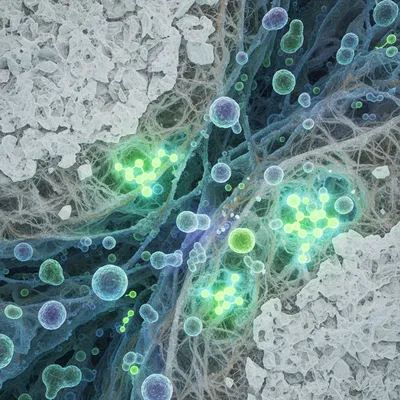
You are spot on. Mold is a type of fungus. It is part of a kingdom all its own. In nature, mold is actually a hero. It is the great decomposer. It breaks down organic matter like fallen leaves and dead trees, recycling those nutrients back into the soil. Without mold, the world would be piled high with organic debris. But, as Daniel pointed out, we do not want that decomposition happening to our drywall, our window frames, or inside our air conditioning units.
Right, because our houses are basically made of mold food. Wood, paper backing on drywall, even the dust that settles on surfaces can provide enough organic material for mold to feast on if the conditions are right.
Precisely. And the key condition is moisture. Mold spores are everywhere. They are in the air we breathe right now, both indoors and outdoors. You can never truly have a mold-free home in the sense of zero spores. The goal is to prevent those spores from finding a hospitable place to land, hydrate, and start growing a colony. It only takes twenty-four to forty-eight hours of moisture for a colony to establish itself.
So if the spores are always there, the variable we can actually control is the environment. Daniel mentioned the winter months being particularly problematic. Why is that? You would think summer humidity would be worse.
That is a common misconception. While summer humidity is a factor, winter creates a specific physical phenomenon called the dew point. Think about what happens when you have a cold can of soda on a hot day. Water from the air condenses on the outside of the can. In the winter, your external walls are like that cold soda can. If the air inside your house is warm and holds a lot of moisture from cooking, showering, or even just breathing, that moisture will condense on the coldest surfaces. In Jerusalem, our thick stone walls have massive thermal mass. They stay cold much longer than the air, creating a constant surface for condensation.
And those cold surfaces are usually the corners of rooms, the areas behind large furniture pushed against external walls, and of course, the windows.
Exactly. When you have that liquid water sitting on a surface, you have a high risk of mold germination. This is often called thermal bridging, where the cold from the outside travels through the wall and meets the warm, humid air inside.
That makes total sense. Now, Daniel brought up an interesting point about the different types of mold. He mentioned Penicillium and Aspergillus, and of course, the dreaded black mold. I think we should clear up some of the fear around the term black mold. Is it as scary as the internet makes it out to be?
This is where we need to be nuanced. The term black mold usually refers to a specific genus called Stachybotrys chartarum. It is known for producing mycotoxins, which can be harmful. However, Stachybotrys is actually quite heavy and sticky; it does not go airborne easily unless it is disturbed. On the other hand, molds like Aspergillus or Penicillium are much lighter. Their spores stay airborne for a long time and are small enough to be inhaled deep into the lungs. For someone with asthma like Daniel, these common molds are often a much more immediate threat than the infamous black mold.
So the color is not necessarily an indicator of how dangerous it is?
Not at all. In the professional remediation world, they often say if you see mold, it does not really matter what species it is. It needs to go. The health impact is often less about the specific toxins and more about the allergic response. When mold grows, it releases thousands of tiny spores and volatile organic compounds into the air. If you are sensitive to those, your immune system goes into overdrive.
I remember him mentioning the air conditioner specifically. That seems like a particularly insidious place for mold because it literally blows the spores around the room.
Air conditioners are mold magnets because they are designed to remove moisture from the air. That moisture collects on the cooling coils and in the drip tray. If the unit is not draining properly or if dust builds up on the coils, you have the perfect combination of water and organic food in a dark, enclosed space. When you turn that fan on, you are essentially using a spore cannon.
A spore cannon. That is a terrifying image. So, let us talk about education. How can a regular person, a renter or a homeowner, educate themselves on what to look for without becoming a professional mycologist?
The first thing is to trust your senses. Daniel was right to follow his nose. Mold often has a very distinct musty, earthy smell. If a room smells like a damp basement, there is likely mold growing somewhere, even if you cannot see it. The second tool is exactly what Daniel used, a high-powered flashlight.
Tell me about the flashlight technique. Why does that work better than just turning on the overhead lights?
It is all about the angle of the light. If you hold a flashlight parallel to a wall, a technique called raking light, it highlights any irregularities on the surface. Mold often has a slightly fuzzy or textured appearance that is invisible under direct, flat lighting. By shining the light across the surface, you can see the shadows cast by the mold colonies. You should check the corners of the ceiling, the baseboards, and especially behind headboards or wardrobes that are pressed against outside walls.
That is a great tip. I actually went around the house with a flashlight after Daniel told me about this, and I was surprised at how much more you can see. It is also important to check the seals around windows. In the winter, you will often see black spots on the silicone or the rubber gaskets.
Yes, and that brings us to the maintenance tasks. If we want to prevent this, what should our weekly or monthly routine look like?
I think the number one task is humidity management. We should all have a small, inexpensive device called a hygrometer in our main living areas. You can buy them for ten or fifteen dollars. It tells you the temperature and the relative humidity. Ideally, you want to keep your indoor humidity between thirty and fifty percent. If it starts creeping up toward sixty percent, you are in the danger zone for mold growth.
That is a very practical takeaway. And if it is too high, what do we do? In the winter, people are hesitant to open windows because they do not want to lose the heat.
It is a trade-off, but you have to vent the moisture. The best way is called cross-ventilation. You open windows on opposite sides of the house for just five to ten minutes a day. It replaces the humid indoor air with drier outdoor air without cooling down the actual structure of the house too much. You should also always use the exhaust fans in the bathroom when showering and in the kitchen when cooking. If you do not have an exhaust fan, that is when you absolutely must open a window.
Another big one is the furniture placement we mentioned. You should leave at least two or three inches of space between your furniture and your external walls. This allows air to circulate. If you press a heavy wardrobe against a cold wall, you create a pocket of stagnant, cold air where moisture will inevitably condense. It is a hidden breeding ground.
And what about the air conditioners? Daniel had professional cleaners come in, which was definitely the right move for a deep clean, but what can we do for regular maintenance?
Every two weeks during the season you are using the unit, you should pull out the plastic dust filters and wash them with warm, soapy water. Let them dry completely before putting them back. This prevents the organic food source, the dust, from building up. You can also buy specialized coil cleaning sprays that are safe for home use. You spray them on the metal fins inside the unit, and they help kill any early-stage growth and wash away debris into the drain line.
That sounds manageable. Now, let us talk about the cleaning process if you do find mold. Daniel mentioned the debate between using bleach versus other solutions. There is a lot of conflicting information out there. What is the actual best practice for a small patch of mold, say, on a windowsill or a small area of a wall?
This is a point of major contention. Most people reach for bleach immediately. Bleach is great for killing mold on non-porous surfaces like tile, glass, or metal. However, on porous surfaces like drywall or wood, bleach can actually be counterproductive. The chlorine in bleach stays on the surface, but the water in the bleach soaks into the material. You might kill the surface mold, but you are effectively watering the roots of the fungus deeper inside the wall.
So what is the alternative?
For porous surfaces, white vinegar is the clear winner. It contains acetic acid, which can penetrate porous materials and kill the mold at the source, or the hyphae, as we call them. You want to spray it on, let it sit for at least an hour to do its work, and then scrub. Another option is a mixture of water and tea tree oil, which has natural antifungal properties. But the most important thing is not just killing the mold, it is removing it. You need to physically scrub the spores away.
And you have to be careful not to spread those spores while you are scrubbing, right?
Absolutely. If you are cleaning a moldy area, you should wear an N ninety-five mask and gloves. You should also dampen the area before scrubbing so the spores do not become airborne. If the patch of mold is larger than about ten square feet, or about one square meter, that is when you should stop and call a professional. At that scale, you are dealing with a volume of spores that can be dangerous to handle without professional-grade containment.
That is a really important threshold to keep in mind. Ten square feet. Anything larger than that is not a DIY project. Now, Herman, you mentioned that mold is a hero in nature and has given us things like penicillin. I think Daniel's point about not being anti-mold in every context is a good one. It is about the right place and the right time.
It is a fascinating history. Alexander Fleming discovered penicillin in nineteen twenty-eight when he noticed that a mold called Penicillium notatum had contaminated one of his petri dishes and was killing the bacteria around it. It revolutionized medicine. We also use mold for some of our favorite foods. Blue cheese, camembert, soy sauce, and even some types of salami rely on specific molds for their flavor and preservation. The difference is that those are controlled environments with specific, non-toxic strains. The mold growing behind your wallpaper is a different story entirely.
It is all about the ecological niche. Our homes are meant to be dry, stable environments for humans, not damp forests for fungi. I want to go back to the idea of second-order effects. If someone ignores a small mold problem in the winter, what happens long-term? Beyond just the health risks for someone like Daniel.
Beyond the health risks, you are looking at structural damage. Mold eats organic matter. Over time, it will literally digest the paper on your drywall and the wood in your wall studs. This can lead to rot and structural instability. Furthermore, mold growth is often a sign of a deeper issue, like a hidden pipe leak or a failure in the building's exterior waterproofing. If you ignore the mold, you are ignoring the signal that your house is being damaged by water.
And from a financial perspective, remediation becomes exponentially more expensive the longer you wait. A small patch you can clean yourself costs almost nothing. A whole room that needs to have the drywall stripped and the studs treated can cost thousands of dollars.
Exactly. It is the classic case of an ounce of prevention being worth a pound of cure. Or in this case, a few minutes of ventilation being worth a few thousand dollars in repairs.
We have talked a lot about what to do once you have a problem, but let us look at some of the more high-tech or modern ways people are addressing this. You mentioned the Jerusalem stone walls. Are there specific products or technologies that help with those older types of buildings?
There are actually some very interesting developments in anti-mold paints and primers. These contain fungicides that are slowly released over time to prevent spores from taking hold. There is also a lot of talk about thermal paint or thermal cork coatings. These do not necessarily provide massive insulation, but they can raise the surface temperature of a wall just enough to prevent the condensation from forming in the first place. If you keep the wall surface above the dew point, the mold cannot grow because there is no liquid water.
That is clever. It is tackling the physics of the problem rather than just the biology. What about air purifiers? Daniel mentioned he is thinking about getting one for his room. Do they actually help with mold?
They can definitely help, but they are not a solution for a growth problem. An air purifier with a true HEPA filter, which stands for High-Efficiency Particulate Air, can capture mold spores that are floating in the air. This can significantly reduce the allergic load for someone like Daniel. However, an air purifier will not stop mold from growing on a damp wall. You have to fix the moisture source first. The purifier is a great secondary line of defense to keep the air clean, but it is not a substitute for maintenance.
Right, you cannot just filter your way out of a leaky pipe or a humid room. So, if we were to summarize the winter checklist for our listeners, what are the top five things they should do starting tomorrow?
Number one, get a hygrometer. Know your numbers. Aim for forty percent humidity. Number two, vent the house. Five to ten minutes of cross-ventilation every single day, no matter how cold it is outside. Number three, check behind your furniture. Pull things away from the walls and use that flashlight trick to look for early signs of growth. Number four, maintain your air conditioner. Clean those filters every two weeks. And number five, address any dampness immediately. If you see condensation on your windows in the morning, wipe it off with a towel. Do not let it sit there.
That is a solid, actionable list. I think it is also worth mentioning that if you are a renter, like we are, you have a responsibility to inform your landlord as soon as you see a problem. In many places, landlords are legally required to provide a mold-free environment, but they cannot fix what they do not know about.
Very true. Document everything. Take photos with that flashlight technique Daniel used. It provides clear evidence of the extent of the problem.
It is funny, we started this conversation talking about a leak fiasco, but it really highlights how much we take our indoor environment for granted until something goes wrong. We live in this bubble of controlled air, and when that control slips, nature, in the form of mold, is very quick to move back in.
It is a constant battle against entropy, Corn. We are just trying to keep our little corner of Jerusalem dry and healthy. I really appreciate Daniel sending this in. It forced me to dive back into the research and remind myself why I need to be more diligent about cleaning my own AC filters.
Guilty as charged. I think we all are. But that is the beauty of this collaboration. We learn from each other's experiences and hopefully, our listeners can avoid some of the headaches, and chest-aches, that Daniel went through.
Absolutely. And if anyone out there has their own stories of DIY remediation or tips for keeping a house dry in a humid climate, we would love to hear them. The website has a contact form, and we are always looking for new angles on these everyday challenges.
Before we wrap up, I want to mention that we have been doing this for a long time now. We are over four hundred episodes into My Weird Prompts, and it is listeners like you who keep us going. If you have been enjoying the show, whether you are a new listener or you have been with us since episode one, please take a moment to leave a review on your podcast app or on Spotify. It really does help the show reach more people who might be sitting in a musty room wondering what that smell is.
It makes a huge difference. We read every single one. And remember, you can find all our past episodes and the RSS feed at myweirdprompts.com.
This has been a great deep dive, Herman. I feel like I have a much better handle on the fungal kingdom now.
It is a vast and mysterious kingdom, my brother. We have only scratched the surface. But for now, let us keep the windows open for a few minutes and get some of that fresh Jerusalem air in here.
Sounds like a plan. Thanks for listening, everyone. We will be back next week with another deep dive into whatever is on Daniel's mind.
Or on your mind! Send us those prompts. Stay dry, stay healthy, and we will talk to you soon.
This has been My Weird Prompts. See ya.
Bye everyone!
You know, Herman, I was thinking about that flashlight trick again. It is basically like the shadows on the moon. Without the low-angle sun, the craters look flat.
Exactly! It is the same principle. Topography is revealed by shadows. You are a natural scientist, Corn.
I just like shiny things and dark corners. Alright, let us go check the bathroom ceiling.
Lead the way. I will bring the vinegar.
Hopefully we do not need it.
Better safe than spore-y.
Oh, that was terrible. Even for you.
I could not help myself. Let's go.
Thanks again for listening, everyone. Take care.
Goodbye!