Hey everyone, welcome back to My Weird Prompts. I am Corn, and I am sitting here in our living room in Jerusalem with my brother.

Herman Poppleberry, at your service. It is a beautiful day outside, but we are about to dive into some pretty intense technical territory.
We really are. Our housemate Daniel sent us a prompt that kind of bridges the gap between the physical infrastructure of the internet and the high-stakes world of global finance. He was talking about how most of our data travels through these massive submarine cables under the Mediterranean and across the Atlantic, which is something we have touched on before.
It is incredible when you think about it. The physical reality of a packet of data leaving Daniel’s phone here in Israel, hitting a cell tower, diving into a fiber optic cable under the sea, and popping up in a data center in Virginia or Washington in less time than it takes to even think about clicking a button.
Right, and Daniel was specifically curious about high-frequency trading and programmatic trading. He noticed that in our previous discussions about networking, we mentioned how some traders are obsessed with shaving milliseconds or even microseconds off their connection times. He wants to know why that matters so much. I mean, if you are buying a stock for the long term, does it really matter if your order hits the exchange at twelve o'clock and one millisecond versus twelve o'clock and two milliseconds?
To a human investor, absolutely not. But to the systems we are talking about today, that one millisecond is an eternity. It is the difference between a massive profit and a complete loss. This is the world of the race to zero, where the laws of physics are the ultimate limit on how much money you can make.
That is what I want to dig into. Because for most people, the image of a trader is still that Wolf of Wall Street vibe, people screaming on a floor, waving papers. But that is basically ancient history at this point, right?
Oh, it is totally dead. The floor of the New York Stock Exchange is mostly a television set now. The real action happens in nondescript, high-security warehouses in places like Mahwah, New Jersey, or Slough in the United Kingdom. These are the data centers where the exchange servers actually live. And when we talk about programmatic trading, we are talking about algorithms—software—making the decisions without any human intervention.
So, let’s start with that distinction. Daniel mentioned both programmatic and high-frequency trading. Are they the same thing?
Not exactly. Think of programmatic trading as the big umbrella. It just means using a computer program to execute a trading strategy. If you have a simple script that says, buy ten shares of Apple every time the price drops by two percent, that is programmatic trading. Even a large pension fund might use programmatic trading to slowly sell off a million shares over a week so they do not crash the price.
Okay, so that is the automation part. Where does the high-frequency part come in?
High-frequency trading, or H F T, is a very specific subset of programmatic trading. It is characterized by three things: high speeds, high turnover rates, and very short-term investment horizons. These firms are not buying a stock because they think the company will be great in five years. They are buying it because they think they can sell it for a fraction of a cent more in five seconds, or even five milliseconds.
A fraction of a cent? That sounds like a lot of work for very little reward.
It is if you do it once. But if you do it a million times a day, those fractions of a penny turn into hundreds of millions of dollars. And this is why the speed matters. In the H F T world, if two computers see the same opportunity, the one that gets its order to the exchange first wins everything. The one that is a microsecond late gets nothing. It is a winner-take-all game at the speed of light.
Okay, let’s break down one of these opportunities. What is a specific example of a strategy where being a millisecond faster actually puts money in your pocket?
A classic one is called latency arbitrage. Imagine there are two different exchanges where you can buy the same stock. Let’s say the New York Stock Exchange and the Nasdaq. In a perfectly efficient world, the price of a stock like Microsoft should be exactly the same on both. But the world is not perfect. Information takes time to travel.
Right, because even light has a speed limit.
Exactly. So, if a big buyer suddenly buys a huge amount of Microsoft on the New York Stock Exchange, the price there might jump up by one cent. That information then has to travel over a fiber optic cable to the Nasdaq exchange servers. If an H F T firm has a faster connection than the rest of the market, they can see the price jump in New York and buy the stock on the other exchange before the price update even arrives there. They buy it at the old, lower price and instantly sell it at the new, higher price.
Wait, so they are basically front-running the news of the price change?
In a sense, yes. They are exploiting the fact that the market is not perfectly synchronized because of the physical distance between servers. This is why firms spent hundreds of millions of dollars to lay a straighter fiber optic cable between Chicago and New York.
I remember reading about that. There was a project called Spread Networks, right? They literally drilled through mountains to make the cable a few miles shorter.
Yes! That was the big story a few years ago. But the tech has moved way past just digging straight lines. Today, the cutting edge is something called Hollow Core Fiber. Standard fiber optic cables use solid glass, which actually slows light down by about thirty percent. But Hollow Core Fiber guides light through a tube of air or vacuum. It is about one point five microseconds faster per kilometer than glass. Microsoft actually bought a company called Lumenisity to deploy fifteen thousand kilometers of this stuff because in H F T, thirty percent faster is the difference between being the predator or the prey.
Thirty percent faster just by changing the type of glass? That is wild. But what about the microwave towers you mentioned before?
Microwaves are still huge because they travel through the air at almost the speed of light in a vacuum. But even those are being challenged now. We are seeing the first real use of satellite constellations for H F T. With the launch of the Starlink Version Three satellites via the Starship rockets, the latency for transoceanic trades—like Chicago to London—is starting to beat subsea fiber cables. Because the satellites use laser links in the vacuum of space, they can take a more direct path than a cable snaking along the ocean floor.
So we have gone from people shouting on a floor to drilling through mountains, to now literally using lasers in space to shave off a few more microseconds.
And it goes even deeper than the towers. Once the signal reaches the data center, you have the internal wiring to deal with. If your server is at the back of the room and your competitor’s server is right next to the exchange’s computer, their data has a shorter physical distance to travel.
No way. Are they actually measuring the length of the ethernet cables?
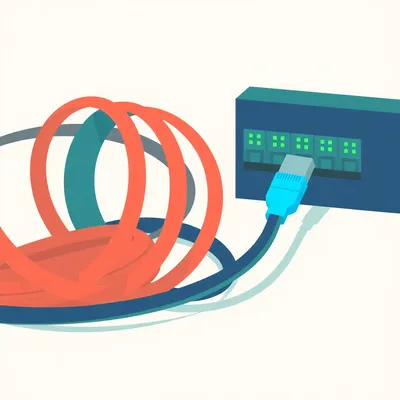
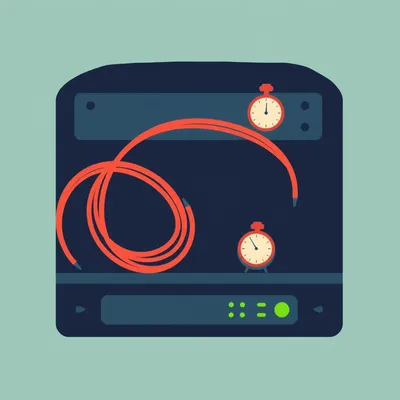
Absolutely. In the early days, it was a huge controversy. Firms would pay extra to have their servers placed physically closer to the exchange’s matching engine. This is called co-location. Eventually, the exchanges had to standardize it. Now, in many data centers, they give every firm the exact same length of fiber optic cable, coiled up in a box, regardless of how close they are to the main server, just to ensure fairness.
That is such a fascinating solution to a very nerdy problem. It is like everyone gets a fifty-foot spool of wire even if they only need five feet, just so no one has a physical advantage. But Herman, let’s talk about the why. Does this actually help the economy? Or is it just a bunch of high-tech parasites skimming money off the top?
That is the multi-billion dollar question. The H F T firms argue that they provide liquidity. Because they are constantly buying and selling, they make it very easy for you or me to buy a stock at any moment. They narrow the bid-ask spread—the difference between the price you buy at and the price you sell at. Historically, that spread might have been twelve cents. Now, for many stocks, it is a fraction of a penny.
So, as a regular investor, I am actually getting a better price because these machines are competing so fiercely?
In theory, yes. You save a few cents on every trade. But the counter-argument, which was famously made by Michael Lewis in his book Flash Boys, is that this is a rigged game. He argues that H F T firms use their speed to jump in front of institutional investors—like your four oh one k or pension fund—and drive up the price just as they are trying to buy.
So if my pension fund wants to buy a hundred thousand shares of something, the H F T machines see the first small order, realize a big buy is coming, race ahead to buy everything available, and then sell it back to my pension fund at a slightly higher price?
That is the accusation. And it has led to some really interesting innovations to try and stop it. There is an exchange called I E X, the Investors Exchange, that actually introduced a speed bump. They literally added thirty-eight miles of coiled fiber optic cable to their incoming data feed to create a delay of about three hundred and fifty microseconds. And interestingly, right now in early twenty-twenty-six, I E X is launching a new Options exchange using that same protected architecture to try and bring that fairness to the derivatives market.
I love the irony of that. We spend billions to go faster, and then someone realizes the only way to make it fair is to force everyone to go a little slower. It is like putting a governor on a racing car.
Exactly. But let’s look at the other side of Daniel’s question. What kind of systems require this? We have talked about the towers and the cables, but the hardware inside the servers is also specialized. You cannot just use a standard off-the-shelf computer for this.
Right, because even the time it takes for a C P U to process an instruction is too long.
Precisely. Many of these firms use what are called F P G As, or Field Programmable Gate Arrays. Unlike a traditional processor that can do many different things, an F P G A is a piece of hardware that you can literally re-wire at a circuit level to do one specific task extremely fast. It bypasses the entire operating system. And the big shift we are seeing this year is firms embedding Artificial Intelligence models directly onto these chips. They call it Tiny M L. It allows the machine to make complex, A I-driven decisions in nanoseconds.
Nanoseconds. That is a billionth of a second. I cannot even wrap my head around that. At that point, you are dealing with the physical limits of how fast electricity can move through a piece of silicon.
We are. And this is why these systems are so expensive and complex. You need a team of elite hardware engineers, people who usually build satellites or supercomputers, just to design the trading cards.
It feels like we are describing a digital arms race. And like any arms race, there are risks, right? I am thinking about things like the Flash Crash.
Oh, the May two thousand ten Flash Crash is the ultimate cautionary tale. For those who do not remember, the Dow Jones Industrial Average dropped about a thousand points—nearly ten percent of its value—in just a few minutes. Hundreds of billions of dollars in market value just evaporated and then mostly reappeared twenty minutes later.
And that was caused by these algorithms, wasn't it?
It was a chain reaction. A large sell order triggered some H F T algorithms to start selling, which triggered other algorithms to sell even faster. Because there were no humans in the loop to say, wait, this does not make sense, the machines just kept hitting the sell button in a feedback loop. It showed how fragile the market can become when speed is the only metric that matters.
It is like a stampede, but instead of cattle, it is packets of data moving at the speed of light. If everyone is programmed to run when they see someone else running, the whole thing can fall off a cliff before a human can even reach for the mouse.
And that has led to the implementation of circuit breakers. Now, if the market drops too fast, the exchanges literally pull the plug for a few minutes to let everyone calm down. It is a forced time-out for the robots.
So, Daniel mentioned that he is not a day trader, but he has three monitors. I think a lot of people see those setups and think that is what it takes to be a pro. But from what you are saying, even a three-monitor setup is basically a horse and buggy compared to these data centers.
It really is. If you are a human looking at a screen, your reaction time is maybe two hundred milliseconds. By the time the light from your monitor reaches your eyes and your brain tells your finger to click, an H F T firm has already traded that stock ten thousand times. For a retail trader, the game is not about speed. It cannot be. You have to win on strategy, on research, or on long-term trends. You will never, ever beat the machines on latency.
That is an important takeaway. If you are trying to out-fast the market from your home office, you have already lost. But does this mean the era of H F T is starting to peak? If we are reaching the speed of light, where do they go next?
That is where it gets really interesting. We are seeing a shift from a race of speed to a race of intelligence. Because everyone is now more or less at the same speed limit—the speed of light in a vacuum—you cannot really get an advantage by being faster anymore. So now, the advantage comes from better prediction. This is where machine learning and artificial intelligence come in.
So instead of just being the first to see a price change, the goal is now to predict the price change before it even happens?
Exactly. These firms are now ingesting massive amounts of alternative data. They are using A I to scan satellite images of parking lots to see how busy Walmart is. They are using natural language processing to analyze every tweet and news article in real-time. They are trying to find patterns that are too subtle for a human to see, and then using their high-speed infrastructure to execute on those predictions.
It is like they are building a digital crystal ball. But instead of magic, it is just massive amounts of data and some very clever math.
And it is still programmatic. It is still the same basic idea Daniel asked about—using code to make financial decisions. But the complexity has scaled up by orders of magnitude. We have gone from simple if-then statements to deep neural networks that are constantly learning from the market.
I wonder what that means for market stability in the long run. If we have all these A I agents competing against each other, do they eventually reach a sort of equilibrium, or do they find new ways to create chaos?
Some researchers worry about emergent behavior. That is when a group of simple agents starts acting in a way that none of them were programmed for. In a market full of A I, you could have a situation where the machines figure out a way to collude or to manipulate the price in a way that humans cannot even detect.
That is a bit terrifying. A market where the prices are being set by a conversation between machines that we do not fully understand.
It is already happening to some extent. Most of the volume on the major exchanges is just machines talking to other machines. We are just living in the world they create.
So, to summarize for Daniel and everyone else, high-frequency trading is basically the ultimate application of networking technology. It is why we have those submarine cables and microwave towers. It is about capturing tiny bits of value by being the first to act on information.
Precisely. And the reason it matters for financial traders to shave off those milliseconds is that the financial markets are essentially a giant game of musical chairs. If there is only one chair—one profitable trade—the person who gets there first wins. If you are second, you might as well be last.
And the systems that require this are not just fast computers; they are custom-built hardware, located physically inside the exchange, connected by the straightest possible lines of communication. It is a world where geography and physics are the most important variables in the equation.
Well put. It is a reminder that even in our digital, cloud-based world, the physical reality of where things are and how they are connected still matters immensely.
I think that is a good place to start wrapping up this part of the discussion. It is a lot to take in, but it really demystifies why our internet infrastructure is built the way it is. It is not just so we can watch Netflix in high definition; it is so the global financial system can operate at a billionth of a second.
It really makes you look at those microwave towers on the hills differently, doesn't it? They are not just for cell phones; they are the nervous system of the global economy.
Absolutely. Before we move on to some practical takeaways, I want to take a second to thank everyone for listening. We have been doing this for over four hundred and sixty episodes now, and the community support has been incredible.
It really has. If you are enjoying these deep dives, please take a moment to leave us a review on your favorite podcast app or on Spotify. It really helps other people find the show and keeps us motivated to keep digging into these weird prompts.
Yeah, a quick rating or a few words in a review makes a huge difference. And if you want to reach out or see our full archive, you can find everything at myweirdprompts.com. We have a contact form there if you have a prompt of your own you want us to tackle.
So, Corn, what are the big takeaways for the average person here? If we are not going to be H F T traders, what does this mean for us?
I think the first takeaway is a sense of perspective. When you see a stock price move, realize that there is a massive, invisible infrastructure behind that movement. It is not just a random number; it is the result of millions of calculations happening at light speed.
That is a great point. And the second takeaway is for anyone interested in technology or engineering. This field is the absolute cutting edge of what is possible with hardware and networking. If you want to see where computing is going, look at what the high-frequency traders are doing today. Five years from now, that technology might be in your phone or your car.
Right, like F P G As and ultra-low latency networking. Those things are already starting to bleed into other industries, like autonomous vehicles and industrial automation.
Exactly. In a self-driving car, a millisecond of latency in the braking system is a very big deal. The lessons learned on Wall Street are being applied to keep people safe on the roads.
That is a much more comforting thought than just skimming pennies off stock trades. I also think there is a takeaway about the value of slowing down. In a world that is obsessed with speed, there is a real competitive advantage in being the person who can step back, look at the big picture, and make a decision based on something other than the last microsecond of data.
I love that. While the machines are fighting over the next millisecond, humans can focus on the next decade. That is where our real edge is.
Well said, Herman. I think we have covered a lot of ground today. From submarine cables to microwave towers to the philosophy of time in finance.
It has been a blast. Thanks to Daniel for the prompt. It is always fun to nerd out on the intersection of physics and money.
Definitely. We will have to see what he sends us next week. Probably something about space elevators or the thermodynamics of a perfect cup of coffee.
I would be down for either.
Alright, that is going to do it for this episode of My Weird Prompts. Thanks for hanging out with us in Jerusalem.
Stay curious, everyone.
We will catch you in the next one. Bye!
Goodbye!