Hey Herman, you ready for another dive into the deep end? Our housemate Daniel sent over an audio prompt this morning that really gets to the heart of how we interact with technology. It is one of those questions that seems simple on the surface but actually challenges the last forty or fifty years of computing history.

Herman Poppleberry here, and yes, I am absolutely ready. I saw the note from Daniel and it immediately took me back to some of the research we were looking at for our episode on graph databases a few months ago. You know, we actually touched on some of this in episode two hundred sixty three when we talked about why AI is moving toward graph structures, but Daniel is asking something even more foundational. He is asking why our actual operating systems, the very ground we walk on in the digital world, are still stuck in the hierarchical folder model.
It is a great point. Think about it. Whether you are on a Mac, or Windows, or Linux, or even your phone, you are looking at a tree. A folder inside a folder inside a folder. It is the filing cabinet metaphor from the nineteen seventies. But as Daniel pointed out in his prompt, that is not really how the human brain works. We do not store a memory of a summer vacation in a folder labeled summer twenty twenty five, which is inside a folder labeled vacations, which is inside a folder labeled personal life. We associate. We think of the smell of the ocean, which connects to a specific song, which connects to a person we met. It is a web, a graph.
Exactly. It is associative memory. Vannevar Bush wrote about this all the way back in nineteen forty five in his famous essay, As We May Think. He proposed a device called the Memex, which was essentially a desk that would let you create associative trails between documents. He realized even then that the human mind does not work by indexing, but by association. Bush envisioned a world where information was tied together by what he called trails of interest. If you were researching the history of the bow and arrow, you would jump from a document on Turkish archery to a document on compound materials, and the Memex would remember that path. And yet, here we are in February of twenty twenty six, and I am still clicking through five subfolders to find a spreadsheet.
It is wild when you think about the lineage. That folder metaphor was popularized by the Xerox Star and the original Macintosh in the early eighties. It was designed to help office workers transition from physical paper to digital screens. It was a bridge. But we have been standing on that bridge for forty years. Why haven't we crossed over to something that reflects the complexity of our actual thoughts? Daniel's prompt asks if anyone has actually tried to build an operating system that replaces the hierarchy with a graph. And if so, why aren't we all using it?
Well, there have been several ambitious attempts, but the most famous one, the one that almost changed everything, was Microsoft's WinFS. This was the holy grail of the early two thousands. It was originally part of the ambitious Longhorn project, which eventually became Windows Vista. The idea was to turn the entire Windows file system into a relational database based on Microsoft SQL Server. Instead of just files, you would have items. An item could be a contact, an email, a picture, or a document. And these items would have rich relationships. A picture wouldn't just be in a folder; it would be linked to the person who is in the picture, the location where it was taken, and the event it was part of. If you changed a contact's phone number, it would update everywhere because the system understood the relationship between the person and the data.
I remember the hype around that. It was supposed to be the end of the file system as we knew it. But then it got scrapped. What went wrong? Was it just too complex for the hardware at the time?
That was a massive part of it. Building a real time, high performance relational engine that sits underneath every single file operation is incredibly resource intensive. Every time you save a file, the system has to update dozens of indexes and relationships. In two thousand four, the overhead was just too high. It slowed the system to a crawl. But there was also a fundamental compatibility problem. The entire world of software is built on the concept of file paths. C slash users slash Herman slash documents. If you take away the path and replace it with a set of relationships, every existing app breaks. This is what developers call the POSIX problem. The Portable Operating System Interface defines how programs talk to files. It expects a hierarchy. If you give a standard program a graph node instead of a file path, it has no idea what to do with it.
So we are essentially trapped by our own legacy. We have built a trillion dollar software ecosystem on top of a nineteen seventies filing cabinet. But Herman, we have so much more processing power now. It is twenty twenty six. We have specialized hardware for AI and vector databases. We have NVMe drives that can handle millions of input output operations per second. Surely the performance overhead of a graph based file system isn't the dealbreaker it was twenty years ago?
You are right, the hardware has finally caught up. In fact, modern storage architectures like CXL, or Compute Express Link, allow the processor and the storage to share memory much more efficiently. This makes the kind of random access patterns you need for a graph much faster. And we are seeing the graph philosophy sneak in through the back door. Think about tags. On a Mac, or even in some Linux file managers like Dolphin, you can tag a file with red, urgent, and project X. That file now effectively exists in three places at once without being duplicated. That is a very basic graph. But it is still an overlay on top of a rigid hierarchy. It is like putting sticky notes on a filing cabinet. You are still using the cabinet.
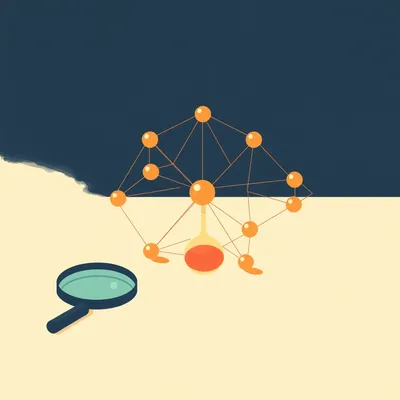
Right, and Daniel's prompt was about something deeper. A visual navigation interface. Instead of a list of files, imagine a constellation of nodes. I click on a project node, and it shows me all the connected people, the relevant emails, the source code, and the research papers. If I click on one of those research papers, the view shifts, and I see other projects that referenced that same paper. It is a dynamic, fluid way of moving through information. Has anyone actually built a UI like that?
There are some fascinating experiments. Have you looked into Arcan? It is a powerful display server and desktop engine that is trying to rethink the entire concept of a windowing system. They have a sub project called Safespaces, which is a virtual reality desktop. In that environment, you are not limited to a flat screen. You can arrange information in three dimensional space, creating visual links between different data points. It moves away from the desktop metaphor and toward a world where information is spatial and relational. There is also the work of Ted Nelson, the man who coined the term hypertext. His Project Xanadu has been trying to build a non hierarchical, deeply interconnected information system since the nineteen sixties. Nelson's vision was that no information should ever be isolated; every quote should be a live link back to its source.
That sounds fascinating, but I am wondering about the cognitive load. One of the reasons hierarchies have persisted is that they are very predictable. I know exactly where my tax returns are because I put them in the taxes folder. In a purely graph based system, if I am just browsing a sea of nodes, do I lose that sense of place? Do I get lost in the web? It is like the difference between walking down a street with numbered houses and wandering through a forest.
That is the great debate in user interface design. Hierarchies provide a sense of containment. Humans like boundaries. We like knowing that thing A is inside thing B. But the downside is that a hierarchy forces you to choose one primary attribute for organization. Is this file organized by date, or by project, or by file type? You have to pick one. A graph lets you have all of them, but you are right, it requires a new way of navigating. You need a way to filter the view so you only see the edges that matter right now. This is where the concept of perspective comes in. In a graph OS, you wouldn't see the whole graph at once. You would see a slice of it based on your current task. If I am in work mode, the system hides my personal photos and highlights the connections between my code and my documentation.
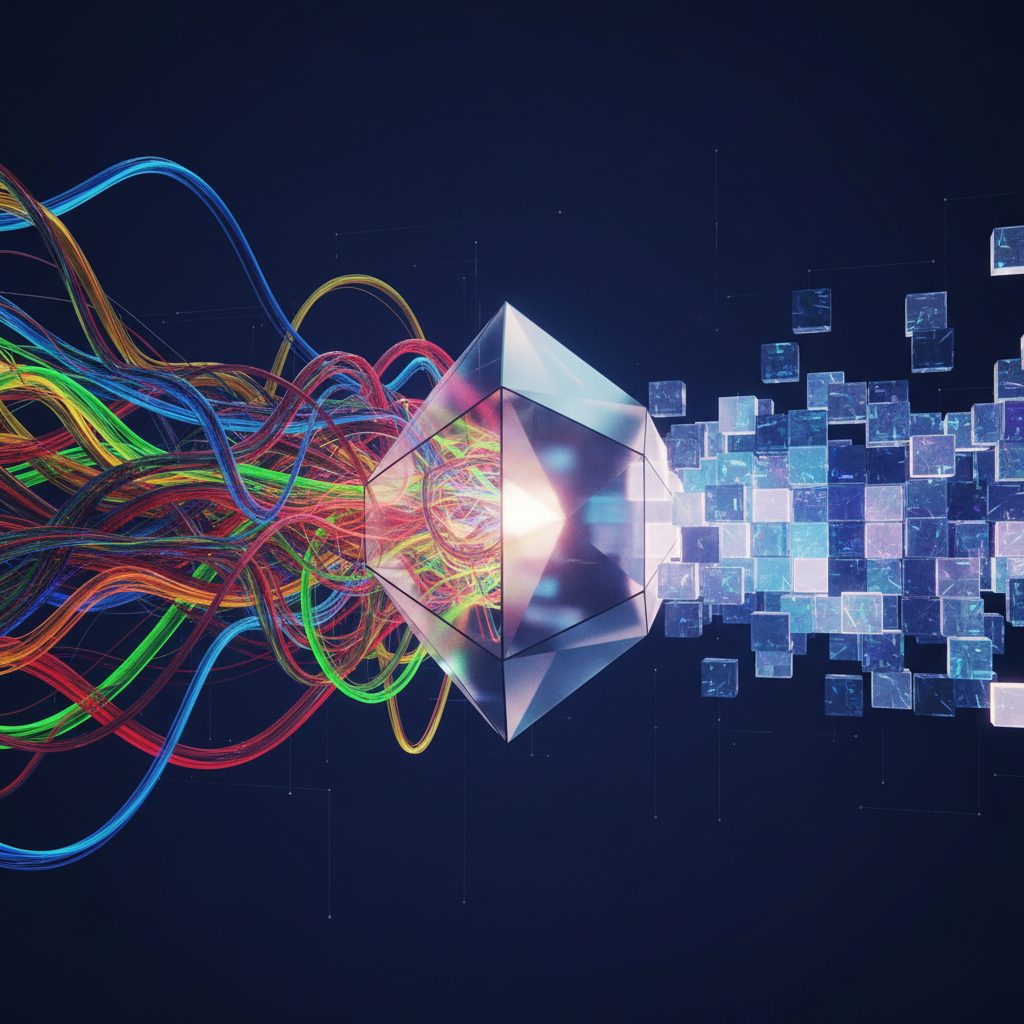
It reminds me of what we discussed in episode two hundred sixty five about semantic computing. We are moving toward a world where the computer understands the content of the file, not just the name. If the operating system knows that a PDF is a contract for a specific client, it can automatically create those graph edges for you. You do not have to manually tag anything. The AI does the heavy lifting of building the graph, and you just reap the benefits of the connections. We are seeing this with the rise of vector databases in twenty twenty four and twenty twenty five. Every file is turned into a mathematical vector. If two files are semantically similar, they are close together in that vector space. That is a graph, even if we don't call it one.
Exactly. And that is where the real breakthrough is happening right now. We are seeing it in tools like Obsidian, Roam Research, and Tana. These are note taking apps, but for many people, they are becoming a sort of personal operating system. They use a graph view to show how different ideas and notes are linked. Users of those apps often report an aha moment where they see a connection between two things they wrote months apart that they never would have noticed in a folder structure. Tana, in particular, uses something they call supertags, which allow you to define what an object is and what relationships it should have. It is very close to the WinFS dream, but implemented at the application level rather than the kernel level.
I use Obsidian for all my research for the show, and I can testify to that. But even there, I find myself occasionally wanting a folder just to keep things tidy. It is like we have this deep seated psychological need for a box to put things in. Maybe the ideal operating system isn't purely a graph, but a hybrid? A system where hierarchies are just one possible view of a much larger, more complex graph?
That is exactly what some researchers call a poly-hierarchical system. You can view your data as a tree when you need to be organized and focused, but you can flip a switch and see the wider web of associations when you are in discovery mode. The problem is that current operating systems make the tree the source of truth and the associations the secondary metadata. Daniel is asking what happens if we flip that. Make the graph the source of truth. If the graph is the source of truth, then the concept of saving a file changes. You don't save a file to a location. You just commit a file to the system with a set of properties. It is more like publishing a post to a social network than putting a paper in a folder. The system then places it in the context of everything else you own.
This brings up a technical point I wanted to ask you about, Herman. If we move away from files and toward these smaller, atomic nodes of information, how does that affect storage? Current file systems like NTFS or APFS are optimized for blocks of data on a disk. If we have millions of tiny nodes and billions of edges, does the underlying hardware need to change? Are we looking at a future where we don't even have a hard drive in the traditional sense?
That is a deep rabbit hole. Traditional hard drives and even early solid state drives were designed around the idea of sequential access. Reading a big file from start to finish. But a graph based OS would involve a lot of random access. Lots of tiny jumps all over the place to follow edges. Modern NVMe drives are much better at this, but we are also seeing the rise of computational storage, where the storage device itself can handle some of the database logic. Instead of the CPU asking for a block of data, it can ask the drive to find all nodes connected to node X. This reduces the data movement between the drive and the RAM, which is the biggest bottleneck in modern computing. We are also seeing the development of graph processors, or IPUs, which are designed specifically for the kind of parallel processing that graph traversal requires.
So the hardware is getting there, and the software experiments exist. But what about the human element? We have been trained for decades to think in folders. Even people who aren't technical understand the concept of a desktop with folders on it. How do you transition a billion people to a graph based interface without causing a total productivity collapse? It is like trying to change the layout of a supermarket while everyone is still shopping.
It has to be incremental. We are already seeing it. Think about the search bar. Most people today don't navigate through folders to find a file; they just hit the search key and type a few words. That is essentially a graph query. You are saying, find me the node with these attributes. The folder structure is becoming invisible. It is still there in the background, but we are interacting with it less and less. The next step is making the relationships between those search results visible and actionable. Instead of just a list of files, the search result should show you the context. This file is related to this email and this person. That is the bridge to a full graph UI.
That is a great point. Search is the gateway drug to a graph based OS. If the search results not only showed me the file but also showed me why it is relevant, who else worked on it, and what other files are similar, I am already using a graph. I just don't realize it yet. And this is where the AI comes in. We talked about this a bit in episode two hundred, but the evolution of the tech stack is moving toward vector embeddings. Every file on your computer can be turned into a mathematical vector that represents its meaning. The distance between those vectors is effectively a graph edge. So, even if you don't manually link two files, the system knows they are related because their vectors are close together in high dimensional space.
Exactly. In twenty twenty six, we are seeing the emergence of what some call the LLM-native file system. In this model, the operating system doesn't just store bits; it stores meaning. When you save a document, the OS runs it through a local model that extracts entities, summaries, and connections. It builds the graph for you. If I am writing a script for My Weird Prompts, the OS knows that and automatically brings the relevant research, past episodes, and Daniel's audio files into my field of vision. I didn't put them in a folder; the system just associated them for me based on the semantic context of my current work.
That is the dream. But there is a dark side to it, too. If the system is doing all the associating, do we lose our own mental map of our data? If I don't know where something is stored, am I more dependent on the AI to find it for me? What happens if the AI gets it wrong? Or what if I want to find something using a connection that the AI doesn't think is important? There is a certain cognitive agency that comes with putting a file in a specific folder. You are making a choice. You are building your own map.
That is the classic tension between automation and control. A folder system gives you absolute control, but at the cost of high manual labor. An AI driven graph system gives you low labor, but at the cost of control. I think the sweet spot has to be a system that lets the AI suggest the connections, but allows the user to solidify them, name them, and navigate them manually if they want to. It is about transparency. The graph should be visible. One of the coolest things about the graph view in apps like Obsidian is that it is beautiful. It is satisfying to see your knowledge grow and interconnect. I think there is a real opportunity for an operating system to use that visual beauty to make computing feel more organic and less like clerical work.
You know, it is funny we are talking about this because I was just looking at some old screenshots of the BeOS from the late nineties. They had this feature called extended attributes. You could attach any kind of metadata to a file, and the file system could index it instantly. You could create virtual folders that were just saved queries. Show me all files from last week that mention the word Jerusalem. It felt so much faster and more fluid than the Windows or Mac systems of that era. It is a shame that kind of thinking didn't become the standard. It felt like a glimpse into a more intelligent way of working.
BeOS was way ahead of its time. It actually had a database like file system, but it didn't go all the way to a graph. It was more like a very fast, flat table. But it proved that you could break the rigid hierarchy and the world wouldn't end. The problem, as always, was the ecosystem. You can have the best OS in the world, but if it doesn't run the apps people need, it is just a curiosity. This is why the transition to a graph OS will likely happen within the browser or within specific productivity suites before it hits the kernel of Windows or macOS. We are seeing it in Notion, where everything is a block that can be linked and mirrored. Notion is essentially a graph based OS that lives inside your browser.
So, to Daniel's question, has anyone proposed rethinking the UI and UX with a graph based approach? Yes, many times. From the early days of Vannevar Bush's Memex to Microsoft's WinFS to modern experiments like Arcan and Safespaces. But the weight of legacy systems and the sheer momentum of the folder metaphor have been incredibly hard to overcome. We are fighting forty years of muscle memory.
But I think we are at a tipping point. The volume of data we each manage is becoming so large that the folder metaphor is breaking down. Nobody can remember which sub-sub-subfolder they put that one PDF in five years ago. We are all relying on search now. And as search becomes more semantic and more relational, the underlying operating system will eventually have to shift to support that. We are moving from the era of the filing cabinet to the era of the neural network. It is a fundamental shift in how we perceive our digital selves.
It is also interesting to think about this in the context of cloud computing. When you use something like Google Drive or Notion, you are already using a system that is more like a graph than a traditional disk. You can have the same file in multiple folders, you can link between pages, you can tag things. The cloud is where the graph OS is being born, while our local desktops are still struggling to move past the nineteen seventies. The web itself is the ultimate graph. We don't navigate the internet by clicking through a hierarchy of global folders. We use links and search. As our local computing becomes more integrated with the web, it is only natural that it should adopt the same architecture.
That is a very insightful point, Corn. The browser is the real operating system for most people today, and the browser doesn't care about folders. It cares about URLs and connections. So, what does this mean for the listener who is frustrated with their messy desktop? What are the practical takeaways here?
Well, first, I would say don't feel bad if your folders are a mess. The system you are using is fundamentally ill suited for the way your brain works. It is not your fault. You are trying to fit a multidimensional mind into a two dimensional box. Second, start experimenting with tools that use a graph or tag based approach. Whether it is Obsidian for your notes, or just getting really disciplined with tags in your current OS. It helps you start thinking in terms of associations rather than locations.
And I would add, pay attention to how you search. Try to use more specific metadata in your file names or descriptions. Even in a folder based system, if you name a file with keywords, you are making it easier for the search index to act as a pseudo graph. You are building the edges yourself. And keep an eye on the emerging world of AI agents. In the next year, we are going to see agents that can navigate your file system for you. They will be the ones building and traversing that graph in the background, so you don't have to. You will just ask, hey, find that contract I was talking to Daniel about last Tuesday, and it will find it through the associations, not by looking in a folder.
It is a brave new world, and it is about time our computers caught up with our brains. I think Daniel is right on the money with this one. The folder is a relic, and the graph is the future. It is just a matter of how long it takes for the foundation to shift. It is going to be a fascinating transition. We have spent half a century building digital walls and boxes. Tearing them down to create a web is going to be messy, but incredibly liberating for our creativity.
I agree. It is about moving from storage to synthesis. We don't just want to keep our data; we want to use it to create new ideas. A graph based OS is the ultimate tool for that. It makes me want to go back and reorganize my own digital life, although maybe I will just wait for the AI to do it for me.
Wise move. Before we wrap up, I want to say a huge thanks to everyone who has been listening. We have been doing this for four hundred eighty three episodes now, and the community that has grown around My Weird Prompts is just incredible. Your questions and insights really push us to dig deeper into these technical rabbit holes.
Absolutely. We love hearing from you. And hey, if you are finding these deep dives valuable, it would mean a lot to us if you could leave a review on Spotify or Apple Podcasts. It genuinely helps other curious minds find the show. We are aiming to hit five hundred episodes by the end of the year, and your support keeps us going.
Yeah, it really does make a difference. You can find all our past episodes, including those ones we mentioned today about graph databases and semantic computing, at our website, myweirdprompts.com. There is also a contact form there if you want to send us a prompt of your own. We read every single one.
Who knows, your question might be the spark for our next twenty five minute rabbit hole. Maybe we will talk about the future of silicon or the ethics of digital immortality.
Thanks again to Daniel for the prompt that started this whole conversation. It is always fun to rethink the basics of our digital existence with you, Herman. It makes the mundane feel a bit more magical.
Likewise, Corn. Until next time, keep those nodes connected.
This has been My Weird Prompts. Thanks for listening, and we will talk to you in the next one.
Take care, everyone. Stay curious.