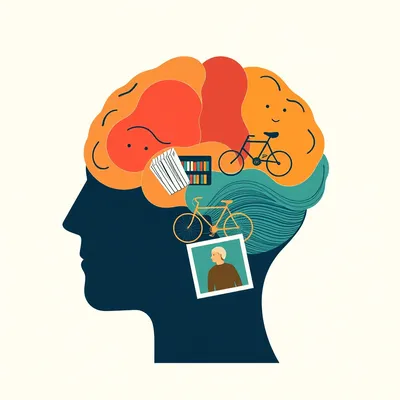
Alright, we are back, and today we are diving into something that hits pretty close to home for us. Our housemate and good friend Daniel sent us a voice note about his son, Ezra. Ezra is about seven months old now, which is such a wild age. I feel like every time I see him in the kitchen, he has learned a new way to interact with the world. But Daniel is feeling what I think a lot of modern parents feel, which is this exhaustion with the granular tracking. He does not want to just log how many ounces of milk or how many minutes of sleep are happening. He is looking for the bigger picture. He wants to know what is actually happening inside that little brain of Ezra’s and how he can support that development without becoming a helicopter parent.

It is the classic data versus insight problem, Corn. And hello everyone, I am Herman Poppleberry. I have been waiting for Daniel to ask this because I have been digging into the current state of pediatric AI and developmental frameworks lately. It is funny that Daniel mentioned his laissez-faire approach while also wanting to know the week-to-week neurological shifts. It is a bit of a paradox, right? You want to be hands-off, but you want to be deeply informed. And honestly, seven months is the perfect time to have this conversation because it is one of the most significant transitional periods in infancy.
It really is. We touched on this back in episode three hundred seventy-eight when we talked about the six-month milestone magic. But seven months is where the rubber really meets the road with things like motor skills and social cognition. So, Herman, Daniel is asking for tools. He is on Android, he is a Linux guy on the desktop, he wants something that feels smart but not overbearing. Where do we even start when we move past the diaper logs?
The first thing we have to address is the shift from quantitative tracking to qualitative understanding. Most parenting apps on the market for the last decade were essentially just fancy spreadsheets. They tell you what happened, but they do not tell you why it matters. If you want the why, the gold standard for a long time has been an app called The Wonder Weeks. Now, Daniel might already know about this one, but it is worth revisiting because of how they have integrated more predictive modeling recently.
I have heard of The Wonder Weeks. That is the one based on the concept of mental leaps, right? The idea that babies go through these predictable neurological growth spurts where their world view literally changes overnight.
Exactly. It is based on the research of Frans Plooij and Hetty van de Rijt. The core idea is that there are ten predictable leaps in the first twenty months. At seven months, Ezra is actually in a fascinating quiet period between major leaps. He finished Leap Five, the world of relationships, around week twenty-six, and he is gearing up for Leap Six, the world of categories, which usually hits around week thirty-seven. Right now, he is in what they call a leap-free zone, but that is actually when the most interesting integration happens. He is practicing the relationship between objects—like realizing that if he drops a spoon, it does not just vanish; it is now on the floor.
That is fascinating because you can actually see that happening. You see a baby start to drop things off a high chair and look down to see where they went. They are testing the relationship between the object and the floor. But Herman, is there an AI component to this now, or is it still just a static calendar based on a due date?
That is where it has evolved. In the last year or so, they have started incorporating more adaptive feedback. Instead of just saying, your baby is in a leap, it asks for specific behavioral markers. Are they more clingy? Are they crying more? Are they sleeping less? The AI then maps these fussy signs to a specific developmental curve. But if Daniel wants something even more robust and activity-based, he should look at Kinedu.
Kinedu. I remember we mentioned them briefly in the daycare dilemma episode, number three hundred ninety-four. What makes their approach different from a standard milestone checklist?
Kinedu is much more focused on the personalization of the developmental roadmap. They use an AI-driven assessment tool called AIRA—that is the Artificial Intelligence Recommendation Algorithm. It covers five key areas: cognitive, linguistic, physical, social, and emotional. Instead of just saying a seven-month-old should be doing X, Y, and Z, the app asks you to perform little mini-experiments. For example, it might ask Daniel to place a toy under a transparent cloth and see if Ezra tries to reach for it. Based on those specific observations, the AI generates a daily activity plan. So, if Ezra is showing a high proficiency in fine motor skills but maybe needs more encouragement with gross motor stuff like crawling, the algorithm shifts the suggested play activities to bridge that gap.
See, that feels more like what Daniel is looking for. It is less about recording that Ezra ate four ounces of peas and more about how to engage with him in a way that feels productive. But let me push back a bit on the AI side of this. Is the AI actually doing something a well-written book could not do? Or is it just a fancy way to serve up content?
That is a fair question. The real value of the AI in these platforms in twenty twenty-six is the synthesis of data points across millions of children to identify subtle patterns. For example, Kinedu’s model can identify if a child’s development is following a non-linear path that might still be perfectly healthy but requires different types of stimulation. It moves away from the average child model and toward the specific child model. It is the difference between a generic workout plan and a personal trainer who watches how you move.
I like that analogy. But Daniel also mentioned wanting to know what is happening in the brain. He wants that deeper scientific context. Is there a tool that acts more like a bridge between the research papers you are always reading and the actual day-to-day experience of parenting?
There is a newer player in the space called Lovevery, which people know for their physical play kits, but their app has become incredibly sophisticated. They have started using large language models to allow parents to ask those why questions. You could literally type in, Ezra is suddenly terrified of the vacuum cleaner and he never was before, what is happening? And the AI, trained on their developmental database, can explain that at seven months, Ezra’s sensory perception is sharpening, and he is beginning to understand cause and effect, which can lead to new fears of loud noises. They even have a feature called Play Finder where you can point your phone camera at any toy and the AI will suggest a developmentally appropriate way to use it.
That sounds like a game changer for someone like Daniel who appreciates the science. It is like having a developmental psychologist in your pocket. But I want to talk about the second-order effects of this. If we have these AI tools telling us exactly what our kid needs every week, do we lose that parental intuition? Daniel mentioned wanting to be laissez-faire. Does an AI-driven developmental map actually make you more of a hover parent because you are constantly checking if they are hitting the specific markers the AI says they should?
That is the danger, Corn. It is the optimization trap. If the app says Ezra should be mastering the pincer grasp this week and he is not doing it, a parent might start to feel unnecessary stress. But here is the thing: the best AI tools right now are being designed to mitigate that. They are starting to include empathy modules and broader windows of development. Instead of saying your child must do this today, they say, here is a three-week window where this skill usually emerges, and here is why it is okay if it takes longer.
I think that is a crucial distinction. It has to be a tool for understanding, not a scorecard. I am also curious about the tech stack Daniel mentioned. He is a Linux and Android guy. He probably cares about data privacy more than the average user. When you are feeding information about your child’s development into an AI, where is that data going?
That is a massive point, especially in twenty twenty-six. Many of these apps have moved toward on-device processing for the more sensitive developmental data. But for a guy like Daniel, he might actually enjoy a more DIY approach using a general-purpose AI. Think about this: he could use a tool like Ollama or LM Studio to run a local large language model on his Linux desktop. He could feed it high-quality developmental frameworks—like the ones from the Centers for Disease Control or the American Academy of Pediatrics—and then use a secure, private instance to synthesize his own observations. He could keep a simple markdown journal of what Ezra is doing and then once a month, ask the local AI to summarize the developmental themes it sees without a single byte of data ever leaving his home network.
That is a very Herman Poppleberry solution. Instead of an app with a bright UI and push notifications, just feed a markdown file into a local LLM. But honestly, for someone with Daniel’s technical background, that might be the most satisfying way to do it. It keeps him in control of the data and allows him to ask the specific, deep-dive questions he cares about without the fluff.
Exactly! He could even ask it to compare Ezra’s progress to specific theories of development, like Piaget’s stages or Vygotsky’s zone of proximal development. He could say, based on these three observations from this week, how does Ezra’s play reflect his growing understanding of object permanence? That is the kind of insight you are never going to get from a standard baby tracker app.
Okay, let’s get specific for a second. Ezra is seven months old. What are the big neurological shifts happening right now that Daniel should be looking for? Regardless of what app he uses, what is the big picture?
Seven months is the dawn of intentionality. Before this, a lot of what babies do is reflexive or accidental. At seven months, the prefrontal cortex is starting to link up more robustly with the motor cortex. This is when they start to have a goal. They see a toy across the room, and they formulate a plan to get to it. This is also when we see the beginning of phoneme expansion. They are moving from simple cooing to repetitive babbling—the classic ba-ba-ba or da-da-da. Their brains are literally pruning away the ability to hear sounds not used in their native language while strengthening the neural pathways for the sounds they do hear.
So it is a massive period of specialization. They are becoming experts in their specific environment. That is incredible. And I imagine that is why they get so frustrated sometimes. Their ambition—the goal they have in their head—exceeds their physical ability to execute it.
Exactly! That is the source of a lot of the seven-month-old fussiness. They want to move, they want to grab, they want to communicate, but the hardware is still catching up to the software. If Daniel uses an AI tool to understand that frustration as a sign of cognitive growth, it changes the way he reacts to it. Instead of seeing a cranky baby, he sees a brain that is working overtime to master a new skill.
That is a great perspective shift. It reminds me of what we discussed in episode two hundred twenty-seven, about parenting in the age of AI. The tech should not replace the relationship; it should provide the context that makes the relationship easier to navigate.
Right. And for Daniel, I think the recommendation would be to pick one tool that offers high-level insights—something like The Wonder Weeks or Kinedu—but use it as a reference, not a rulebook. And maybe lean into that idea of using a general-purpose AI for the deeper, more philosophical questions. There is an app called Nara Baby that is very popular right now because it is very clean and does not have all the cluttered advice, but it allows for easy sharing between caregivers. It is great for the tracking part, but for the big picture, Daniel might want to stick to the more research-heavy platforms.
What about the physical environment? Are there AI tools now that can look at how a baby is moving through a camera feed and give developmental feedback? I know that sounds a bit dystopian, but I have seen some startups working on this.
It is definitely happening. There are companies like Cradlewise and others that are using computer vision to monitor sleep patterns, but there are research-grade tools now that can analyze a baby’s spontaneous movements to check for neurological health. For a home user, we are seeing the beginning of this in apps that ask you to take a video of your baby doing tummy time or reaching for a toy. The AI then analyzes the symmetry of movement or the fluidity of the reach. It is called motor repertoire mapping.
That feels like it might be a bit much for Daniel’s laissez-faire vibe. I can see him being more interested in the linguistic side. Is there anything that analyzes babbling?
Yes! There is an app called Babbly that is doing some incredible work in this space. It uses AI to analyze short video or audio clips of a baby's vocalizations. It is not just counting words; it is looking for the complexity of the babbling. For a seven-month-old, it is looking for canonical babbling—those repeated consonant-vowel sounds. It gives you a report on their speech development and suggests activities to encourage more conversational turns. It is basically a way to track brain health through sound.
That is a great takeaway. It is something Daniel can do without any tech at all, but the tech can help him see the pattern. It is about the back-and-forth. It is the serve and return.
Exactly. And honestly, if Daniel wants to stay laissez-faire, the best use of AI is to have it summarize the developmental milestones for the next month and then put the phone away. Just knowing that Ezra is working on sitting without support or that he is starting to understand the word no—even if he does not follow it yet—gives Daniel the framework to just enjoy Ezra’s company.
I think that is the sweet spot. Use the AI to build the framework, then live your life inside it. So, to summarize for Daniel: if he wants a dedicated app, Kinedu is probably the best for personalized developmental activities. The Wonder Weeks is the best for understanding those sudden shifts in mood and perception. And for the deep-dive, nerd-level stuff he loves, using a private local LLM like Ollama to synthesize his own observations with established research is a total pro move.
I would also add one more: BabySparks. It is very similar to Kinedu but some people find the UI a bit more intuitive on Android. It has thousands of video-based activities that are tailored to where your child is at that exact moment. It is great for when you have five minutes and want to know, what is a meaningful way I can play with Ezra right now that actually helps his brain?
That is a great list. And I think it is important to remember that at seven months, the most important AI is the one inside Ezra’s head. It is the most sophisticated learning machine in the known universe. Everything Daniel does—every time he picks him up, every time he makes a funny face, every time they try a new food—is high-quality data for Ezra’s developing neural networks.
That is a beautiful way to put it. We are just trying to use our silicon-based AI to understand his carbon-based AI. And it is a fascinating time to be doing it. We have more insight into the infant mind than at any point in human history. Remember when we talked about the infant mind in episode three hundred seventy-eight? We were marveling at how they perceive the world before they have language. Now, we have tools that can almost translate that perception for us.
It is wild. Before we wrap this up, I want to talk about the practical takeaways for any parent of a seven-month-old who is listening. Because while Daniel’s question was about tools, the underlying theme is about how we use information to be better parents.
Right. Takeaway number one: focus on the transitions. Seven months is a bridge. They are moving from being stationary to being mobile. They are moving from milk to solids. They are moving from sounds to proto-words. If you feel like your baby is suddenly more difficult, it is almost always because they are in the middle of a massive hardware upgrade.
Takeaway number two: the power of the conversational turn. If you want to boost Ezra’s brain development, just talk back to him. When he babbles, treat it like a profound statement. Respond to him. Ask him questions. That back-and-forth is the foundation of his social and linguistic brain.
And takeaway number three: do not let the data drive the bus. Use the apps for context, but trust your eyes. If Ezra is happy, curious, and engaged, he is doing great, regardless of what a milestone checklist says. The AI is a map, but the map is not the territory.
I love that. The map is not the territory. That should be the tagline for this whole podcast, honestly. Daniel, I hope that gives you some good leads for Ezra’s next few months. It is such a fun age, and I am looking forward to seeing him master that pincer grasp so he can start stealing our snacks.
He is already halfway there! And for everyone else listening, if you have found a tool or an AI-driven approach to parenting that has actually made your life easier or your understanding deeper, we want to hear about it. This field is moving so fast.
Definitely. You can reach out to us through the contact form at myweirdprompts.com. And hey, if you have been enjoying the show and finding these deep dives helpful, we would really appreciate it if you could leave us a review on Spotify or your favorite podcast app. It genuinely helps other curious people find us and join the conversation.
It really does. We have been doing this for over four hundred episodes now, and the community feedback is what keeps us going. So thank you for being part of it.
Alright, that is it for this episode of My Weird Prompts. You can find our full archive, including those past episodes we mentioned on parenting and child development, at myweirdprompts.com. There is an RSS feed there too if you want to make sure you never miss an episode.
Thanks for listening, everyone. And thanks to Daniel for the great prompt. We will see you next time.
Take care, and happy parenting.
Until next time!
So, Herman, I have to ask. If we had these tools when we were kids, do you think our parents would have used them? Or would they have just laughed and gone back to their newspapers?
Oh, our mom would have been all over it. She would have had a spreadsheet for our milestones before spreadsheets were even a thing. Dad? Dad would have been the one saying the map is not the territory while secretly checking the app when Mom wasn't looking.
That sounds about right. I can see you as a baby, Herman. You were probably hitting the cognitive milestones way ahead of schedule and the motor ones exactly on time, just to be precise.
I was a very efficient infant, Corn. Very efficient.
I don't doubt it for a second. Alright, let's get out of here.
See ya.
This has been My Weird Prompts. Thanks for being with us.
Goodbye!