Hey everyone, welcome back to My Weird Prompts. I am Corn, and I am sitting here in our living room in Jerusalem with my brother, the man who probably knows the tail number of every aircraft currently in the sky.

Herman Poppleberry, at your service. And Corn, that is a slight exaggeration, but only slight. I did have my alerts going off this morning for a few interesting arrivals at Ben Gurion.
I believe it. So, our housemate Daniel sent us a really fascinating prompt today. He has been watching all these open source intelligence accounts on X and Telegram, you know, the ones that post screenshots of flight paths whenever there is a geopolitical flare up. And he is curious about the mechanics of it all. Specifically, he wants to know what this A D S B data is, how it actually works, and why on earth military or private planes do not just turn the whole thing off if they want to stay hidden.
It is such a great question because it touches on this intersection of old school physics and modern transparency. We are living in an era where a hobbyist with a thirty dollar radio antenna can sometimes see things before the Pentagon officially acknowledges them. Daniel is right to be curious, because the why of it is often more interesting than the what.
Exactly. And I think we should start with the basics for a second, because I feel like most people have used Flightradar twenty four to see when their aunt's flight is landing, but they do not realize they are looking at a live broadcast from the sky. So, Herman, what is actually happening when a plane pings its location?
Right, so the acronym Daniel mentioned is A D S B. That stands for Automatic Dependent Surveillance Broadcast. It is worth breaking those words down because they tell you exactly how it works. It is Automatic because it does not require any input from the pilot or a request from the ground. It just happens. It is Dependent because it depends on the aircraft's own navigation system, usually G P S, to know where it is. It is Surveillance for obvious reasons. And Broadcast is the kicker. It is not a point to point message. It is a shout. The plane is literally shouting its position, altitude, and velocity to anyone within range who is listening.
And when you say shouting, you mean it is broadcasting on a specific frequency, right?
Exactly. It is ten ninety megahertz. It is a line of sight radio signal. So, if you are a ground station, you can pick up these signals from a few hundred miles away, depending on how high the plane is flying. The cool thing is that the equipment to receive this is incredibly cheap now. You can buy a little U S B dongle, what we call an R T L S D R, plug it into a cheap Raspberry Pi computer, and boom, you are a part of the global flight tracking network.
This is what blows my mind. The data that fuels these massive websites like Flightradar twenty four or A D S B Exchange is essentially crowdsourced from thousands of people like you, Herman, who have these little antennas on their roofs.
It is the ultimate citizen science project, but for intelligence. Now, to Daniel's point about why they do not just turn it off. This is where it gets into the weeds of aviation safety versus operational security. In most of the world now, including the United States and Europe, A D S B is mandatory for almost all aircraft. The reason is simple: traditional radar is actually kind of old and limited. Radar relies on a ground station sending out a pulse and waiting for it to bounce back. A D S B is much more precise. It allows planes to fly closer together safely, which increases the capacity of our crowded skies.
So, it is a safety feature first and foremost. If you turn it off, you are essentially flying blind to the civilian air traffic control system, which is a massive safety risk in busy airspace.
Precisely. If you are a military transport plane flying from Germany to the Middle East, you are flying through some of the most congested airspace in the world. If you turn off your transponder, you are a hazard to every Boeing seven forty seven and Airbus three twenty around you. Air traffic controllers will get very angry, very quickly. Plus, most of the time, these flights are not actually secret. They are just routine logistics. There is no reason to hide a C seventeen Globemaster carrying spare parts or food.
But what about the stuff that is actually sensitive? Daniel asked about military maneuvers. We have seen cases where people track doomsday planes or signals intelligence aircraft. Surely, they have the option to go dark?
Oh, they absolutely do. Military aircraft have what is called Mode S or Mode Four and Mode Five for combat situations. They can encrypt their signals or just stop broadcasting A D S B entirely. But here is the thing that the O S I N T community has figured out: even when they go dark on the public broadcast, they often still have to communicate with civilian towers if they are in civilian airspace. And sometimes, the absence of a signal tells a story too.
That is a classic second order effect. If a specific area usually has ten military pings a day and suddenly it has zero, but the satellite imagery shows the base is active, that is a data point in itself.
Exactly. And there is also the deterrence factor. Sometimes, the military wants you to see them. Think about when the United States flies B fifty two bombers near a sensitive border. They often leave their transponders on. They are making a statement. It is like saying, hey, we are here, we are big, and we want you to know exactly where we are. It is a form of electronic saber rattling.
That is fascinating. So, it is not always a mistake when a high value asset shows up on a map. Sometimes it is a deliberate choice. But what about the private jets? Daniel mentioned the trackers who follow celebrities or billionaires. We have all heard about the Elon Jet controversy. How are they finding those, especially if the owners want privacy?
This is where the different philosophies of flight tracking websites come in. A site like Flightradar twenty four is a commercial entity. They generally honor block lists. If a billionaire or a government asks them to hide a specific tail number from their public map, they usually do it. But, and this is a big but, they cannot stop the data from being broadcast into the air.
Right, because the plane is still shouting it.
Exactly. So, you have sites like A D S B Exchange. Their motto is basically unfiltered data. They do not honor block lists. They argue that if you are using public infrastructure and flying through public airspace, your broadcast is public information. So, when people track Elon Musk or Taylor Swift, they are usually using these unfiltered sites that just show everything their receivers pick up.
It creates this weird cat and mouse game. I remember reading about how some private jet owners started using the Privacy I C A O Address program, or P I A. Does that actually work, or have the researchers found a way around it?
It is a bit of a band aid. The F A A in the United States allows owners to request a temporary, randomized aircraft address so that their permanent tail number is not broadcast. But O S I N T researchers are clever. They look at pattern of life analysis. If a jet with a random I D always leaves from a specific private hangar in Hawthorne, California, and always lands near a Tesla factory, it does not take a genius to figure out who is on board. Plus, even with periodic changes, if you are the only Gulfstream G six fifty flying from point A to point B at three in the morning, you are still going to get spotted.
It is basically the digital version of tailing someone. You might change your license plate, but if you are still driving the only neon pink Cybertruck in town, people are going to know it is you.
That is a perfect analogy. And it is not just about where they are going, it is about the why. This leads into what Daniel asked about things trackers have found before the news. We all remember the Ukraine invasion in twenty twenty two, but there have been much more recent examples.
Like what?
For example, in 2025, there was a mystery aircraft with an unusual callsign flying calibration patterns over western Ukraine. It was not in any public database, but the O S I N T community tracked it for hours, figuring out it was likely a specialized electronic warfare or mapping platform being tested. Or think back to May of twenty twenty four, when nearly three million people were simultaneously watching a Turkish Akinci drone on a flight tracker. It was searching for the crash site of the Iranian president's helicopter. The public saw that the drone had found the heat signature before the official news agencies even confirmed the location.
It really democratizes intelligence. It used to be that only a few people in a windowless room in Virginia knew that a high stakes intercept was happening. Now, anyone with a smartphone and an interest in aviation can watch the ballet happen in real time.
It is a double edged sword, though. We have to talk about the risks. There have been instances where flight tracking data has been used by hostile actors. For example, if you are an insurgent group and you want to know when a supply plane is landing at a specific base, a public flight tracker is a goldmine. This is why, in actual combat zones, you will see planes go dark the second they cross into contested airspace.
Which brings me back to a question I have had. If they go dark, how do they avoid hitting each other? If I am a pilot in a war zone and I turn off my A D S B, am I just hoping the other guys on my side have their radar on?
They use something called T C A S, the Traffic Collision Avoidance System. It is separate from the public A D S B broadcast. It is a more interrogative system where planes talk to each other directly to say I am here, do not hit me. It is much harder for a hobbyist on the ground to intercept and map that in the same way. Plus, military pilots are trained for deconflicted airspace where they have specific corridors and altitudes they are allowed to be in.
Okay, so there are layers to this. The public stuff we see is just the tip of the iceberg. But even that tip is incredibly deep. I want to go back to the O S I N T researchers Daniel mentioned. It is not just about seeing a dot on a map. They are doing actual detective work, right?
Oh, absolutely. They look at hex codes. Every aircraft has a unique twenty four bit address assigned by the International Civil Aviation Organization, or I C A O. Even if a plane changes its call sign, like changing from United twelve to Reach five hundred, that hex code stays the same. Researchers maintain huge databases of these codes.
So, if a mystery plane shows up with a hex code that was previously linked to a C I A front company, the researchers flag it immediately.
Exactly. There was a famous case years ago involving extraordinary rendition flights, where researchers tracked specific tail numbers to black sites around the world just by piecing together these flight logs. It is painstaking work. They also look at things like squawk codes.
Wait, squawk codes? That sounds like something a parrot would do.
Close! It is a four digit code a pilot sets on their transponder. Most of the time it is just a code given by air traffic control to identify them. But there are emergency codes. Seven five zero zero means a hijack. Seven six zero zero means radio failure. And seven seven zero zero is a general emergency. O S I N T accounts often have bots that automatically post whenever a plane anywhere in the world squawks seven seven zero zero.
I have seen those. It always feels like a mini drama is unfolding. You see the tweet, you look at the map, and you see a plane doing a rapid descent or a sharp turn back to the airport. It is like being a digital first responder.
It really is. And it has changed journalism. In the old days, a plane crash or a mid air emergency might not be reported for hours. Now, journalists are often alerted by these automated O S I N T bots before the airline even knows there is a P R crisis on their hands.
It makes me wonder about the future of this. As technology gets better, will it become harder or easier to hide? Because we are seeing space based A D S B now, right?
Yes! This is a huge development. Traditionally, if a plane flew over the middle of the Atlantic, it disappeared from trackers because there were no ground stations to pick up the signal. But now, companies like Aireon have put A D S B receivers on satellites. And they have advanced capabilities, including better position verification. So, even if a military is trying to jam or spoof G P S signals to hide their planes, the satellites can cross reference the A D S B data to figure out exactly where the plane really is.
So now there truly is no place to hide. Even in the middle of the ocean, your plane is shouting to a satellite, and the satellite can tell if you are lying about your coordinates.
Exactly. It has solved one of the greatest mysteries in aviation history, or at least it would have. If the missing Malaysia Airlines flight M H three seventy had happened today, with space based A D S B, we would likely know exactly where it went down. Back in twenty fourteen, we only had pings to a satellite that did not include G P S coordinates. Today, that coverage is global and real time.
That is a massive leap for safety. But for a sensitive military operation, it must be a nightmare. If you are trying to move assets secretly across the Pacific, you basically have to go completely electronic silence or E M C O N.
And E M C O N is hard. Modern planes are chatty. They have satellite links, they have weather radar, they have radio. Truly going dark is an operational challenge. It is not just flipping one switch. And even if you do, O S I N T researchers are now looking at other things. Did you see that report from late twenty twenty four where researchers tracked world leaders by looking at the Strava fitness data of their bodyguards? They found Putin's secret palace just by watching where his security detail went for their morning jogs.
That is hilarious and terrifying. It really shows how open source does not just mean available to everyone, it means available to anyone who is clever enough to use it.
Well put. And for our listeners who want to get into this, it is surprisingly accessible. Like I said, you do not need a degree in aerospace engineering. You just need a bit of curiosity and maybe a thirty dollar dongle.
I was going to ask about that. If someone wants to set up their own feeder station, what does that actually look like? You have one on our roof, right?
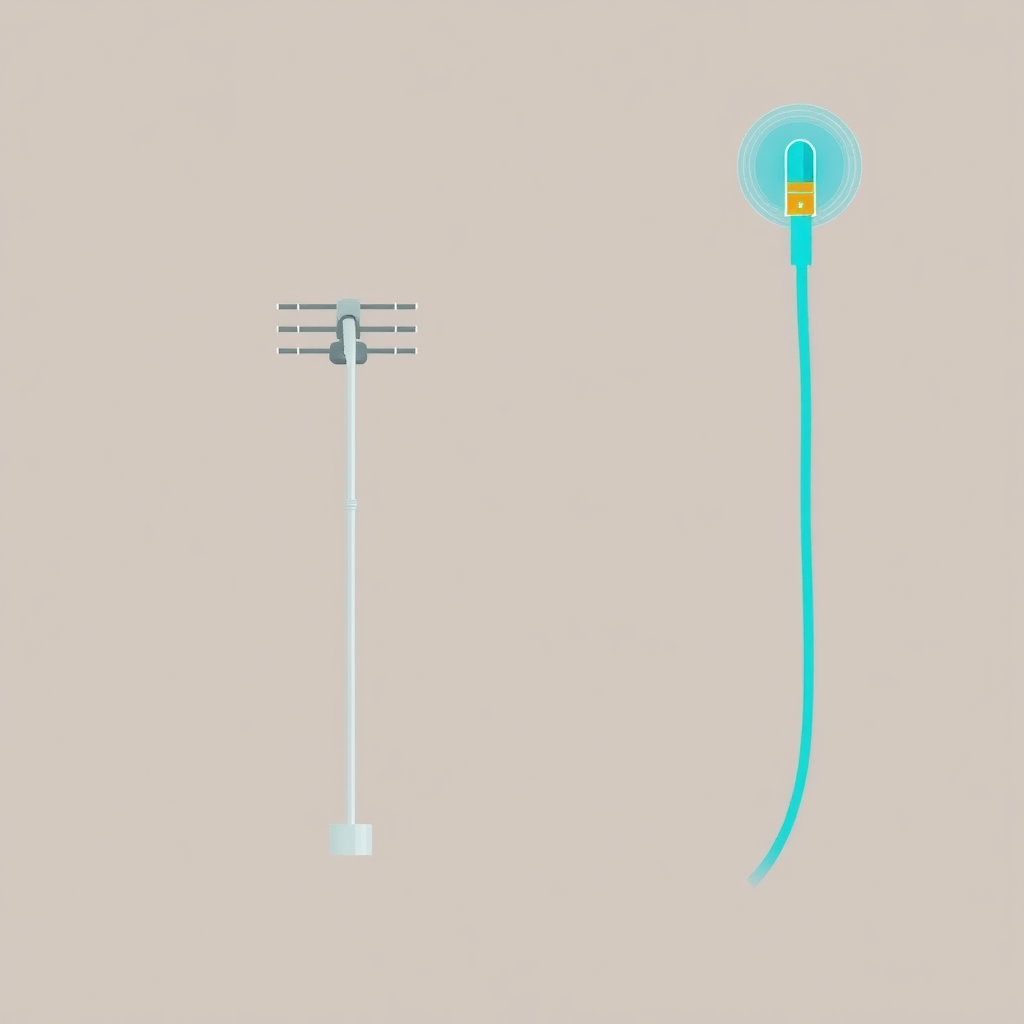
I do! It is basically a small antenna, about the size of a pencil, mounted as high as possible. It is connected by a cable to a U S B receiver plugged into a Raspberry Pi. The software is mostly open source. You can set it up to feed data to Flightradar twenty four or A D S B Exchange. In exchange, these sites often give you a Business or Enterprise account for free, which normally costs hundreds of dollars a year.
So, you are essentially trading your local data for global access. It is a win win for the nerds like us.
Exactly. And you get to see what is flying directly over your house. Sometimes I will hear a low rumble, look at my local feed, and see that it is a heavy transport plane coming into Ben Gurion Airport that is not showing up on the main maps yet because of the slight delay. It is a very cool feeling.
It also makes you realize how busy the sky is. We look up and see blue, but electronically, it is a crowded highway of signals, I Ds, and data points.
It really is. And I think that is the core of Daniel's prompt. We are peeling back the curtain on a system that was designed for pilots and controllers, but has been hijacked by the public for the sake of transparency and curiosity.
I love that. Hijacked for transparency. It is a good way to describe the whole O S I N T movement. But let's talk about the misconceptions for a second. What is something people get wrong when they see a weird flight path on X?
Oh, man. The chemtrail people are the obvious ones, but let's ignore them. A more common one is when people see a plane holding or doing circles and they immediately think it is a secret mission or an emergency. Most of the time, it is just traffic management. If an airport is busy, the tower will tell a plane to enter a holding pattern. It looks suspicious on a map if you do not know aviation, but it is the equivalent of a red light on the highway.
Or when they see a plane disappear from the map and think it crashed.
Right! That is usually just a coverage gap. If a plane drops below the line of sight of the nearest ground station, or if it is flying behind a mountain, the signal cuts out. It does not mean the plane fell out of the sky; it just means the shout did not reach the ear.
That specificity is so important. It is easy to see a ghost on the screen if you do not understand the underlying physics of radio waves.
Exactly. Radio waves are fickle. They bounce, they get blocked, they fade. Understanding the limitations of the data is just as important as understanding the data itself. That is what separates a good O S I N T researcher from someone who is just spreading rumors.
So, looking forward, do you think we will see more encryption of these signals? If governments are annoyed that their saber rattling is being tracked so easily, will they try to shut down the public's ability to see A D S B?
It is a tough sell. Because the system is global, you would have to get every country in the world to agree on a new, encrypted standard. And remember, the whole point of A D S B is that it is open so that any plane can see any other plane. If you encrypt it, you lose that universal safety benefit. I think we will see more obfuscation, like the randomized I Ds I mentioned, but the broadcast itself is here to stay.
It is a permanent shift in the balance of power. The secretive actors now have to operate with the knowledge that someone, somewhere, is probably watching their transponder.
And that is a good thing for accountability. Whether it is tracking a politician's questionable use of a private jet or documenting the build up to a conflict, more data usually leads to more truth. Or at least, more provable facts.
I think that is a perfect place to start wrapping up this part of the discussion. It is amazing how a simple radio broadcast has transformed into a global tool for intelligence and accountability.
It really has. And Daniel, I hope that answers your question. The why they do not turn it off is safety, but the how we see it is just a community of people with antennas and a lot of patience.
Well, before we go, I have to ask you, Herman. What is the weirdest thing you have ever personally seen on your tracker?
Oh, easy. A few months ago, I saw a flight path that was literally drawing a giant smiley face in the sky over the Mediterranean. It was a private pilot who was clearly bored and decided to use his G P S track as a canvas. It took him about an hour to get the eyes and the mouth just right.
That is incredible. In a world of geopolitical crises and high stakes maneuvers, there is still room for a pilot to just... draw a smiley face.
It made my day. It is a reminder that even with all this high tech surveillance, there is still a human in the cockpit.
That is a great note to end on. And hey, if you are listening and you have found something weird on a flight tracker, or if you have a question about something else that has been on your mind, we want to hear from you. You can find us at our website, myweirdprompts dot com. There is a contact form there, and you can also find our R S S feed for more episodes.
And if you have been enjoying the show, we would really appreciate a quick review on your podcast app or on Spotify. It genuinely helps other people find us and join our little community of curious minds.
It really does. We have been doing this for nearly three hundred episodes now, and it is the listeners who keep the momentum going. So, thank you for being a part of this.
This has been My Weird Prompts. I am Herman Poppleberry.
And I am Corn. Thanks for listening, and we will talk to you next time.
Keep your eyes on the skies, everyone.
And your antennas tuned. Bye!